


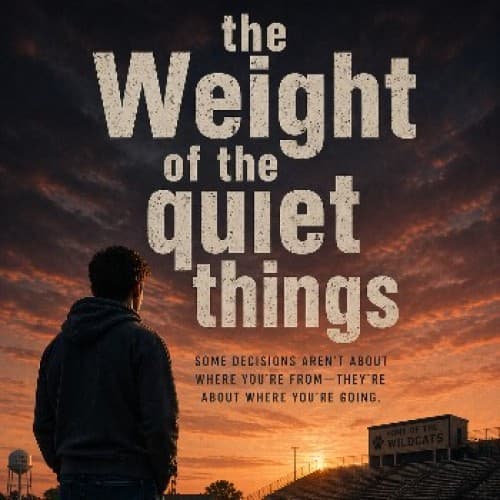

When Tommy finally stepped off the plane onto American soil, the cabin erupted in applause. Hands clapped, voices rose, strangers leaned into the aisle to catch a glimpse of him as if he were something worth witnessing. They called him a hero. He smiled when he was supposed to. Nodded when they thanked him. Said the words they needed to hear. But inside—nothing. Nothing but the hollow ache of shame. It sat heavy on his chest; thicker than the desert dust he had left behind. Shame… and guilt. Guilt for the men who had not made it back. For the brothers who would never again feel the weight of solid ground beneath their boots. He had come home, and they had not. That truth clung to him like a stain he could never scrub clean. Around him, the world was alive—laughing, celebrating, breathing freely in a way he no longer understood. It all felt wrong. Too loud. Too bright. Too… distant. Tommy stood in the middle of it, feeling like a ghost in his own life. Home was not home anymore. And then he saw him. Harris stood at the edge of the crowd, half in shadow, as if he did not belong there either. For a moment, everything else faded, the noise, the clapping, the unbearable cheer for it all. There was only Harris. Alive. Real. Tommy moved toward him without thinking. And then he broke. The tears came hard and sudden, ripping through him before he could stop them. Harris caught him, arms strong and steady, holding him upright as the weight of everything Tommy had been carrying finally gave way. They had been separated after Ramirez died—torn apart, reassigned, scattered like fragments of a life that no longer existed. “I didn’t think I’d ever see you again,” Tommy managed, the words breaking apart in his throat. Harris did not answer right away. He just held him tighter. Then, quietly, “Yeah… I know.” Harris picked up Tommy’s bag without asking, and together they walked away from the celebration. Neither of them looked back. There was nothing there for them. For so long, Tommy had believed he was alone—that whatever part of him had survived the war was the only piece left. But now, standing beside Harris, he realized one thing remained. One brother. And for now, that was enough. They spent the evening in silence at first, then in stories—halting, unfinished, but real. They spoke of Collins. Of Ramirez. Of the men they had lost and the men they had become in the aftermath. They spoke of where they had been sent, what they had seen, what they could not forget. It was the first time Tommy had felt anything in a long time. And it terrified him. Because feeling meant remembering. And remembering meant pain. The quiet, when it came, was unbearable. Normal life felt like a poorly rehearsed act—everyone else knew their lines, their roles, their place in the world. Tommy did not. He drifted through it, detached, watching from somewhere just outside himself. Crowds made his skin crawl. Suddenly noises snapped something primal inside him, sending his heart racing before his mind could catch up. More than once, his hand shot instinctively to where his rifle should have been—where his sidearm used to rest—only to find empty air. Each time, panic followed. He had grown used to the weight of those weapons, the certainty they brought. Without them, he felt exposed. Vulnerable. Naked. Sleep offered no refuge. When it came at all, it came violently dragging him back into the moments he could not escape. The dreams were relentless. Unchanging. Ramirez being pulled from the Humvee, his body soaked in blood that would not stop flowing. The explosion repeated itself—Collins’s truck disappearing in a burst of fire and shrapnel, the sound echoing endlessly in Tommy’s mind. But the worst were the others. The ones he never spoke about. The little boy. His mother. They had been the first lives he had taken with his own hands. Not collateral. Not distant. Not abstract. Direct. He had pulled the trigger. And he had watched them die. Those faces followed him into every dark corner of his mind. Into every attempt at sleep. Into every moment of silence. So, he drank. At first, just enough to take the edge off. To quiet the noise in his head. Then more. To forget. But forgetting never came. The memories only blurred at the edges, waiting patiently for the moment he closed his eyes. They were always there. Waiting. Watching. Punishing. This, he told himself, was what he deserved—for surviving when others did not. For failing to bring his brother home. The bottle became his rifle. Something to hold onto. Something to rely on. Something to keep the enemy at bay—except now, the enemy lived inside him. It was the only way he knew to drown out the screams. And still, he would wake in the dead of night, gasping, shaking, his heart hammering against his ribs as if trying to escape. This was his life now. This was the war he could not leave behind. And some nights—on the worst nights—Tommy found himself wishing for the desert. Because out there, at least, things had made sense.