


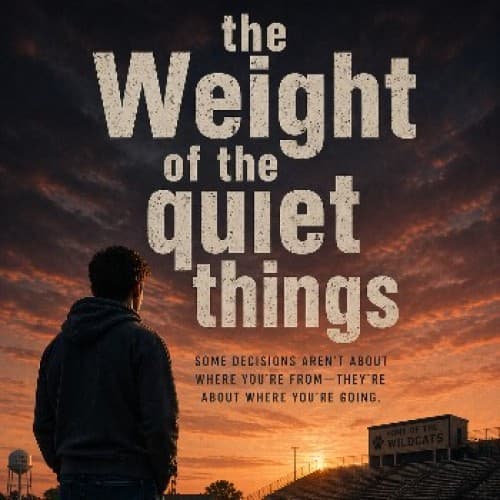

The heat struck first. One hundred and twelve degrees, though the number meant nothing once you stepped into it. It was like standing too close to an open furnace, the kind that stripped the moisture from your lungs with every breath. The air was not just hot, it was hostile, pressing in on him as if the desert itself rejected his presence. Even breathing felt like work. And the sand—God, the sand—was everywhere. It wormed its way into boots, into weapons, into rations, into the thin, restless hours they called sleep. When the wind picked up, it stung exposed skin like a swarm of needles. It did not matter how tightly you sealed your gear or how often you cleaned your rifle. The sand always wins. If hell existed, Tommy thought, this had to be it. The first convoy did not feel real. Tommy sat rigid inside the Humvee, scanning the road ahead with a focus so intense it bordered on panic. His heart hammered against his ribs, loud enough—he was certain—that everyone could hear it over the hum of the engine. His hands gripped his weapon so tightly his knuckles blanched white beneath the dust. Every shadow felt like a threat. Every piece of debris on the roadside looked like it might explode. “Relax,” Ramirez said, reaching over and tapping Tommy’s helmet. His voice was calm, almost casual, like they were out on a training exercise instead of rolling through hostile territory. “You’ll get used to it.” Tommy nodded, though he did not believe him. Not for a second. He forced himself to take a slow breath, steadying the tremor in his chest. Just like training, he told himself. If something happened, he could not afford to freeze. But standing in the turret later, exposed above the vehicle, scanning the endless stretch of road—it felt surreal. Like a dream he could not wake up from. He was in the first line of defense if anything went wrong. There was no way anyone could get used to this. He got used to it. That was the worst part. Weeks bled into months, and the extraordinary became routine. The crack of small arms fire, the distant thump of an RPG—it all faded into the background noise of daily life. What once sent adrenaline surging now barely registered as anything more than an inconvenience. It had been four months, and their unit had not lost anyone. A miracle, really. Not what they had expected. Not that for which they had been trained. They had imagined constant firefights, relentless combat, the kind of war movies were built on. Instead, there were long patrols under a merciless sun, escorting supplies, moving detainees, watching empty roads for threats that rarely came. And when they did, they were brief. Sharp. Forgettable. Normal. The first IED took Collins. They never saw it coming. One moment, laughter crackled over the radio, some joke half-told, half-finished. The next, the world tore itself apart. A deafening blast. Fire. Twisted metal. Screaming. Tommy stumbled from the vehicle, his ears ringing so violently it drowned out everything else. The world blurred at the edges, shapes and movement smeared together as adrenaline surged through him like electricity. Training took over. Secure the area. Establish a perimeter. Call it in. He shouted orders he could not hear, his voice swallowed by the chaos. His body moved on instinct, even as his mind struggled to catch up with what had just happened. It was not until he saw the helmet lying in the dirt that everything stopped. He turned slowly, dread coiling tight in his chest. His gaze fell on the wreckage of the Humvee—what was left of it—and the reality hit him all at once. “We gotta move, man!” Ramirez shouted, grabbing his arm. Tommy did not budge. His hand shot out, gripping Ramirez with a force that bordered on desperate. “That was Collins’ truck,” he said, his voice unsteady, almost unrecognizable. The three of them—Tommy, Ramirez, and Harris—spread out, searching. This was not about the mission anymore. It was not about orders or objectives or anything they had been told they were fighting for. They were looking for their brother. Harris found it first. A scrap of burnt fabric. Dark with blood. A name barely visible through the soot. They did not say anything. They did not have to. The truth settled over them, heavy and absolute. There was nothing left to save. That night, no one spoke. Not even Ramirez. After that, it became easier. Not the loss—but the understanding that it could happen at any moment. Another man, from a different squad. Then another. The quiet confidence they had carried when they first arrived—untouchable, invincible—eroded piece by piece. They had grown comfortable. Too comfortable. They had started to believe they might make it through untouched. War corrected that illusion quickly. Beds in the tents went empty. Gear sat where it had been left, untouched, as if its owner might return at any moment. They never did. Ramirez was the last. The blast flipped their vehicle like it weighed nothing. One moment they were moving, the next the world spun violently, metal screaming as it twisted and tore apart. The supply truck behind them ignited instantly, swallowed whole by flames that burned too hot, too fast. Tommy scrambled free, disoriented, his pulse roaring in his ears. “Ramirez!” he shouted, though he already knew. The fire was too intense. It pushed him back, a wall of heat that made rescue impossible. There was no reaching him. No saving him. By the time the flames died down, there was nothing left but charred wreckage. Nobody. Just melted fragments of dog tags, warped beyond recognition. Tommy sat in the dirt long after the others had pulled away, staring at what remained. At what did not. Collins. Another. Another. Ramirez. Two brothers gone. And for the first time since he had arrived, the noise inside him fell silent. In its place there was something worse. A hollow, expanding emptiness. Each loss had carved into him, cutting deeper than the last, until there was nothing left to hold, only the quiet, suffocating realization that he was still here. And they were not.