


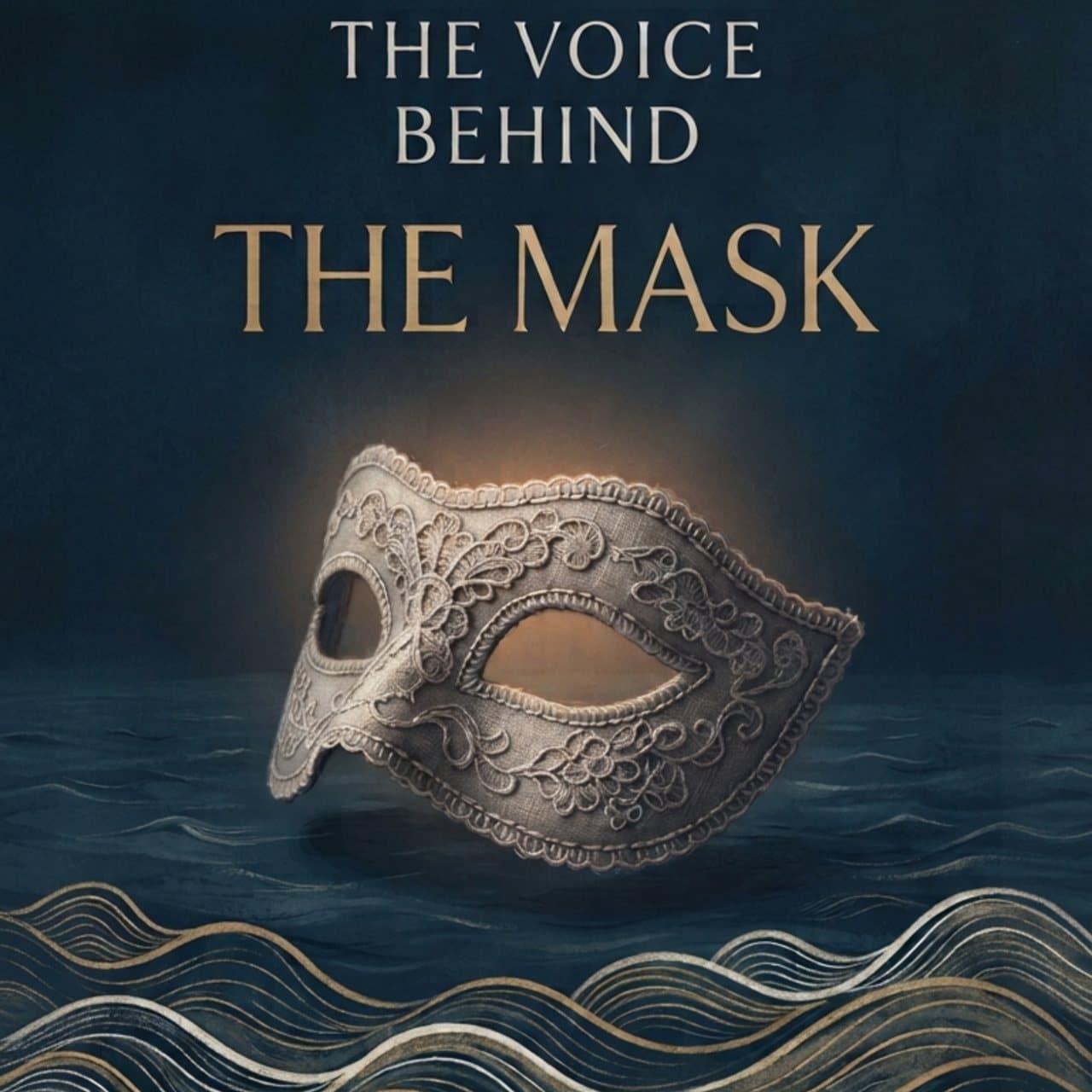

It was spring in New Zealand. I hadn't thought about that until the doors of the arrivals hall slid open and the morning hit me, bright and green and smelling of cut grass and salt. I had left Ireland in the black end of October, and I had arrived, a day and a half later, in a country where the year was only just beginning. It felt like stepping through the back of a wardrobe.
LongWhiteCloud was waiting for me with a hand-lettered sign that said FANTAIL, which I did not understand yet. She turned out to be a tall woman in her forties with silver rings on every finger and a laugh like a kettle coming to the boil. Her name was Aroha.
"You were rather drunk when we spoke," she said, taking my case. "I thought it best not to mention it."
"I'm so sorry."
"Don't be. It's the only reason you said yes."
She was right about that, and I liked her at once.
The festival was held at a place called Kōwhai Point, a long, low resort of timber and glass on a headland three hours north of the city, where the land ran out into a bay so blue it looked like a mistake. There were villas scattered down the hillside among tree ferns, a main house with a wide veranda, a library, a jetty, and a garden that went on to the edge of a cliff. It was all very beautiful and very quiet. Too quiet, I thought. There wasn't another writer in sight.
"That's the point," said Aroha, when I said so. "Nobody arrives together. Nobody sees anybody. You'll be shown to your villa, and everything you need is waiting."
A young man in a white shirt carried my case down a winding path through the ferns to a villa halfway down the hill, with a deck that hung out over the water. He put the key in my hand, bowed slightly, and left without once looking at my face, which I took to be part of the training.
Inside there was a desk by the window, a bed as wide as a field, a bath you could have swum in, and a basket on the table with a pot of honey, a bag of lemons and a card that said Welcome, Fantail. And on the bed, tied with string like a present for someone you don't know very well, lay a small grey box and a cream envelope.
I opened the envelope first.
Dear Fantail,
For fifteen days you will not be asked who you are. Here is how it works.
Every morning at six, a theme will arrive beneath your door. Every night, by midnight, you will upload one piece of writing, any length you like. The readers will vote, the judges will score, and the leaderboard will be public. The highest total at the end wins the Long White Cloud Prize.
Whenever you leave your villa, you will wear the mask in the box. Breakfast is served on the main veranda between eight and ten, for any bird who wishes to come. Dinner will be brought to your door. There will be one gathering, a garden party on the eighth evening, and one ceremony, on the last.
You will not be told who the other writers are. Each of you has been given the name of a bird. We trust you to be kind about it.
Inside your own door, you may be whoever you like. Outside it, you are a bird.
With great affection,
Aroha
I opened the box. On a bed of tissue paper lay a half mask of soft grey linen, the kind that covers you from the brow to the tip of the nose and ties behind the head with a ribbon. A small card beside it said, in careful handwriting: Fantail: a small brown bird that never sits still and has no idea how small it is.
I tied it on in the washroom, in front of a mirror with a gilt frame, and I looked for a long time.
The mask covered everything that I thought of as me: the round nose, the wary grey-green eyes, the whole plain upper half of my face. What was left was a mouth, a chin, a pale neck, and a great deal of hair coming out of its pencil. It was red. I should say that plainly, because people hear red hair and imagine a flame, a heroine, somebody with a temper and a sword. Mine was nothing of the kind. It was a flat, deep, full red, the colour of an old brick wall, without a single gold thread in it, and in Ireland it was so common that nobody had ever once looked twice. Skye was the flame. I was the brick.
But in the gilt mirror, under the grey linen, even the brick looked like something. For the first time in thirty years, I looked like somebody who might do something.
I unwrapped the green scarf and set the boy on the desk, propped against the lamp.
"Here we are," I told him. "Other side of the world. I said I'd take you out."
He grinned at me out of his blazer. He had no opinion on the matter either, but at least he had better manners than the cat.
***
I met him on the jetty.
I hadn't meant to go anywhere. I had picked at the supper that had been left outside my door, and answered the first theme card, which was waiting for me on the table, and then I had sat on my deck listening to the water slap the posts until my legs began to shake. I was a long way from home. Somewhere out in the dark, fourteen strangers I would never see were sitting at desks just like mine, and one of them, according to the card, was the most skilful liar in the world, and I had no way of knowing which.
So I put the mask on, and went down the wooden steps to the end of the jetty, where the lights didn't reach.
"If you're going to be sick," said a voice behind me, "do it downwind. I'm told it's the done thing."
I turned.
There was a man sitting at the very end of the jetty with his shoes beside him and his feet dangling over the water. He wore the grey mask, tied behind a head of dark hair that wanted cutting, and a white linen shirt with the sleeves rolled to the elbow. He was tall, even folded up like that. I could see the long line of his forearms and the careful way his hands rested on his knees. Under the mask, the lower half of his face was all clean angles, and he was smiling.
It was a crooked smile. One corner went up a fraction before the other, as though it were trying to be serious and kept losing the argument.
"I'm not going to be sick," I said, with dignity, and then, "I might be a little sick."
"Sit. It passes." He moved his shoes to make room, and I sat, a careful yard away, with my own feet over the water. "Long flight?"
"Thirty hours."
"Then you're allowed. I'm Kea."
"Fantail."
"I know. I'd have known you anywhere. You're the one who looks like she's been left in a very large room." The smile again. "Don't worry. I'm not good at this either. I write thrillers. Badly."
"How badly?"
"There's a man in the first chapter who explodes a boat for no reason. I've been told the reason is that I didn't think of one."
I laughed, properly, for the first time since Dublin. It came out as a snort, and I clapped a hand over my mouth, and he laughed too, quietly, as if he had been waiting for it.
"Actually," he said, after a moment, "it's Gideon. If we're breaking rules."
"Gideon." I turned it over. It was a name out of the Bible, a name for a man who lays out a fleece in the dew. "Is that your real name?"
"It's what my mother called me."
"Of course it is," I said, delighted. "And I'm the Queen of Sheba. That's a writer's name if ever I heard one. Gideon what?"
"Just Gideon."
"Very mysterious. Very Brontë. I'd keep it." I was smiling so hard my face hurt. It was the easiest thing in the world, I discovered, to talk to a man whose eyes I couldn't see and who couldn't see mine. "And what do you do when you aren't exploding boats?"
"Business." He said it as though it were a slightly embarrassing medical condition. "Dull. Mostly sitting in rooms. You?"
"I make rings."
He turned his head. Under the mask I felt his attention shift like a lamp swinging round. "Rings."
"And earrings. Small things. People bring me whatever they've got, an old brooch, a dead aunt's watch, and I make it into something they can wear."
"That's lovely," said Gideon quietly. "That's a better job than mine."
We sat there for an hour. I don't think we said anything important. We talked about the stars, which were upside down, and about whether it was true that water swirled the other way in the southern hemisphere (he said yes, I said no, we agreed to test it in the bath). When I finally stood, my legs had stopped shaking.
"Fantail," he said, as I reached the steps.
"Yes?"
"Good luck tomorrow."
I went up the hill under the stars in my little grey mask, feeling oddly as though somebody had put a coat on me.
***
Day Two.
The theme arrived under my door at six, on a card the colour of eggshell. Threshold.
I wrote something careful. A woman standing outside a house in the rain, afraid to go in. It was neat, and sad, and perfectly respectable, and when I uploaded it at midnight I felt the kind of tired you feel after good behaviour. In the morning the leaderboard put me ninth.
I went up to the main veranda at eight with my heart in my throat. It faced the sea, with long tables, bowls of mangoes and a pot of tea the size of a bucket, and it was full of birds. Grey masks everywhere, bent over plates, murmuring in a dozen accents. It was the strangest breakfast of my life. Nobody asked a question. Nobody said a name.
But you cannot stop writers talking about themselves, and by the end of the first cup I had the lay of the land. There was a gruff Scotsman, who went by Raven, and who wrote crime in a voice like gravel in a bucket. There was a very thin, very young man called Swan, who whispered that he was writing a love story in secret from his family in Accra. There was a Brazilian woman with gold hoops showing through her mask-strings, who called herself Parrot and seemed to know everything about everyone by the second slice of toast. There was an Owl, and a Falcon, and a woman who said she was a Nightingale and had the grace not to sing.
"They say she's here," said Parrot, lowering her voice, in a way that made everyone lean in. "Skye Calder. It has to be one of us. Why else would a festival give away so much money?"
I choked on my tea. Raven thumped me on the back with a hand like a shovel.
"It'll be one of the pretty ones," he said gloomily. "They always are."
"She's probably forty and living in a basement," said Swan, who had clearly read the comments too.
"Or fifty," I said weakly, "and in her mum's."
"Allow me," said a voice at my elbow, and a hand lifted the pot from in front of me and promptly poured half the tea into the saucer.
"You've never made tea in your life," I said.
"Not once." Gideon looked at the saucer. "My mother used to."
He said it lightly, as though it were a joke, and made another attempt, with great concentration, and handed me a cup that was nearly full. It was too strong and slightly cold and I drank every drop. I thought of Skye in my story, asking a rich man whether he had ever in his life made someone a cup of tea. I thought how silly it was to be moved by this, a man in a grey mask holding a teapot like a bomb. I thought: Don't.
"Elodie?"
It came from the end of the table, soft, almost a question. I looked up, startled, and there was Sam in a crisp white shirt with a staff lanyard round her neck, grinning, with one hand pressed over her mouth as though she had said a swear word in church. Nobody else had turned. The veranda was loud with forks and accents, and Gideon had already gone off to the far end of the tables with the empty pot, his back to us, studying the sea as though it owed him an answer.
"Sorry, sorry," Sam mouthed, and crossed to me with a plate in her hands, as if delivering it. "Slip of the tongue," she said, low. "I'm not meant to know anyone's names. I'm staff here. Events, hospitality, whatever Aroha tells me. I told you it was complicated."
"Sam!" I whispered. I could have hugged her, a familiar face ten thousand miles from home. "You didn't say it was this festival!"
"I didn't want to spoil the surprise." She looked past me, to the tall back at the end of the veranda, and back again, with a bright, curious look, as if she had noticed something and was far too polite to mention it. Then she tapped her wrist where there was no watch. "Eat. You'll need it. Tomorrow's theme is a nasty one."
It was. The card under my door the next morning said only: Hunger.
***
Day Four.
I sat at the desk in my villa with the sea on three sides and the boy propped against the lamp, and I did not write the neat, respectable thing.
I hadn't meant to. I had meant to write about bread, or a famine, or a woman at a stove. But at about two in the afternoon, with the sun lying across the page like a cat, I felt something stir at the back of my head. Skye had been standing there all along. Arms folded, bare feet, salt in her hair, waiting politely, the way she waits for everyone, for me to stop being so afraid of her.
Let me, she said.
I let her.
She wrote nine pages in two hours. A woman at a long table with a bowl of peaches, and a man across from her who had not eaten in three days because he was too proud to ask. She ate slowly, in front of him. She let the juice run to her wrist and did not offer him a bite. When he finally said, hoarsely, "Please," she looked at him for a long time, and said, "Better," and fed him from her hand.
I read it over, and my face was scarlet, and I thought: I can't post this. Then I thought: It's a mask. Nobody here knows who I am. And I thought, with the little flare of daring that had carried me across the world: Not one of them.
I posted it at eleven-fifty-nine.
In the morning I was first on the leaderboard by a hundred and forty points.
"Fantail!" said Aroha, passing the veranda, and nearly dropping a mango. "Who are you?"
"A small brown bird," I said, and the whole table laughed, and Raven growled something about "the quiet ones," and Parrot demanded to read it, and I said no, firmly, with my cheeks aflame under the mask.
Only one bird didn't laugh.
I found him that evening in a cane chair at the far end of the veranda, with a printout of my piece in his hands and the page held close to his chest. The leaderboard pieces were all public. I should have known.
"Where did you get this?" said Gideon.
"It was online."
"I know. I read all of them." He looked up. I couldn't see his eyes, but I could feel them like warmth on my face. "Fantail. It's very good. It's... I don't know where it comes from. That."
"Lots of lonely evenings," I said, lightly.
He laughed. Then he stopped, and was very still, and I thought: He's heard it. He had heard something under the lightness, something I hadn't meant to put there. I sat down on the other end of the cane chair and looked at the sea, and for a time neither of us said anything at all.
"I'd like to read the rest of what you write," he said at last. "If you ever wanted to show me."
"What about yours?"
"Mine is terrible."
"Show me."
He went off and came back with a battered notebook and a deeply embarrassed face, and I read his explosion-of-a-boat chapter by lamplight with a pencil in my hand. It was indeed terrible. It was also, in the margins, so unexpectedly full of tender little observations about the men in it, how one of them hummed when he was lying, how another folded his napkin into a boat when he was afraid, that I put the pencil down and looked at him.
"Your villain's lonely," I said.
"Is he?"
"He's the most interesting person in it. Make him smaller. Let him be afraid of something. Then he won't need to blow up the boat."
Gideon was very quiet. "I'll try," he said.
He did. The next night there was a new chapter. And the night after that.
***
I don't know when I stopped counting.
The days ran together like water. At six, the card under the door. All day, the writing, with the windows open and the sea going on in the background like someone breathing in their sleep. At midnight, the upload. In the morning, the leaderboard, and Parrot shrieking, and Raven muttering, and the long table with its enormous pot of tea. I had never felt so awake. Every sentence I wrote seemed to open a door onto a bigger room. Skye was no longer a woman standing at the back of my head; she had come forward, and I had stopped being afraid of her, and some mornings I wrote with her hand and some mornings with mine, and I could no longer tell which was which.
And in the evenings, there was Gideon.
It was always the veranda or the jetty, in the hour between supper and dark. He did not say much. He was one of those men who think before they speak, who hold a silence like a cup, and I found, with growing astonishment, that I could sit in it. He asked questions and listened to the answers as though they might be tested later. He remembered everything. On the sixth night he asked me what the brooch had been like, the one I'd told him about, and I said Victorian, scrolled, the clasp worn away, and he said, "And you made two rings from it?" and I said yes, and he was quiet for a moment and said, "I wish I'd seen that."
I told him about Liese. I told him about Margot and Declan, and the bookbinder's flat, and the cat who had never given me her name. I told him I worked in a shop outside the village. I told him I'd never been anywhere, until now. He told me his work was in rooms, and he said it with so little pleasure that I stopped asking.
"Do you like it?" I said once.
"I'm good at it."
"That isn't what I asked."
He smiled his crooked smile. "No. It isn't."
***
Day Eight.
The gala was the only public event in the whole fifteen days, a garden party with a string quartet and strings of fairy lights hung in the trees, and everybody came in masks, the whole sleek flock of us, and for a few hours the guests were indistinguishable from the staff. Aroha was in silver. Raven had put on a bow tie. Parrot wore a gown the colour of a mango and danced with Swan, who looked as though he had been captured.
I wore the only dress I had packed, a green one I had made myself years ago, and I felt like an imposter in it until the moment I saw Gideon cross the lawn.
I don't know what I'd expected. He had always been in a linen shirt with rolled sleeves. Tonight he wore a dark jacket, cut so well that it seemed to have been poured onto him, and the mask, and nothing else but the fairy lights, and he walked as though the grass had been laid down for him. People turned. I noticed that in a vague way and thought: He's one of those men. Then he stopped in front of me and held out a hand.
"Fantail," said Gideon. "I think this is the part where I'm meant to ask."
"I don't dance."
"Neither do I."
We danced. It wasn't graceful. He trod on my foot twice and apologised both times, and I laughed into his shoulder, and somewhere in the third turn I felt it: his hand, large and warm, settling into the small of my back.
I stopped breathing.
I had imagined it a hundred times. A dark room, a stranger, a man's hand against my spine. I had written it into Skye's life without ever having felt it myself. Now it was happening, in a fairy-lit garden under a hundred masked faces, to a woman in a green dress she had sewn on a Sunday, and it was nothing like the dark room, and it was better.
"Is this all right?" he said, close to my ear.
"Yes." It came out as a breath. "Yes. It's all right."
His hand did not move. He didn't hold me tighter. He kept the same careful pressure, light and steady, as though I were something that might be startled. I thought: He's waiting for me to say. And I thought, for the first time in my life, that I could say anything at all.
***
Day Nine.
"Elodie," I told him, in the morning, over the teapot. I hadn't planned it.
He stopped with his cup halfway to his mouth.
"It's my real name," I said. "I'm not meant to say. But I wanted you to have it."
"Elodie." He said it slowly, as if he were trying a key in a lock. Then he put the cup down. "Thank you."
"You can tell me yours."
"I did."
"Gideon is not a real name."
"It's the realest thing about me," he said gently, and I laughed, because I thought he was being charming.
***
Day Ten.
The storm came in at dusk. It had been brewing all afternoon, a bruise on the horizon, and when it broke the whole bay went white with it. By seven the power had gone, and the birds were herded into the library with candles and a great deal of wine, and for a while it was a party. Parrot told ghost stories. Raven read a murder aloud in a quite unexpected falsetto. Swan fell asleep on a sofa with a book on his chest.
I found Gideon at the far end of the long room, where the shelves ran into the dark, with a candle between us on the window seat.
"I'm bad at storms," he said.
"I thought you were bad at tea."
"I'm bad at several things."
The rain was hammering on the glass. I curled my feet up under me. Out of the dark came a feeling I hadn't had in years, the feeling you only get when you're sheltered with another person, with the weather howling outside and no reason to be brave. I told him about my mother. I hadn't told anyone, not even Margot, not in full: the yellow raincoat on its hook, the lavender, the tune I could never name. I told him how quiet the house went. How my father had turned to clocks.
He did not say I'm sorry. He sat very still, and when I had finished he said, "I lost mine when I was fourteen."
"Oh, Gideon."
"It was fast. We'd had a trip, the year before. A good one. I think it was the last good thing. And after she died, everything was..." He stopped. There was a long silence, filled with the rain. He turned his hand over on his knee, palm up. "I've never liked being happy since. It seems a rather dangerous thing to be. Like a loan. Someone always comes round to collect."
My throat had gone tight. "That's the saddest thing anyone has ever said to me."
"I didn't mean it to be." He smiled, in the dark. "I think you're the first person I've told."
I put my hand over his, on his knee. He looked down at it, and I felt his fingers curl very slowly, as if they'd forgotten how, around mine.
Neither of us said another word. We sat like that for a long time, while the storm went over and the candle burned down to a stub.
***
Day Eleven.
"Do you think she's here?" said Gideon.
It was the last of the gold light, and we were on the jetty again, a yard apart. The leaderboard had come out that morning: I was ahead by over three hundred. People had begun to look at me. Parrot had twice put her head on one side and said, "Fantail, you write rather like..." and stopped.
"Who?"
"Skye Calder."
My heart gave a single loud knock. "I don't know. Maybe. Do you?"
"I think she's somewhere in the world, and I think she's probably nothing like what people say." He was looking at the water. "I don't think she's forty, or in a basement. I think she's someone small and quiet, who laughs when nobody's watching. Who sits in corners. Who writes the bravest things in the world because she's been too frightened to say them out loud."
I laughed, too loudly, and turned it into a cough.
"That's a very specific theory," I said.
"It's a hopeful one."
"Why do you care?"
He was silent for a moment. "Because I'd like to think she exists," said Gideon. "I'd like to think someone does."
I looked down at my hands. In my lap they had begun to tremble, and I couldn't have said why.
***
Day Fourteen.
The final theme had come under my door at six that morning, and it was a single word, and I had sat with it for hours before I knew what to do.
Home.
I did not write Skye. I did not write Don. For the first time in fifteen days, I wrote something entirely my own, about a small woman in a lit window, watching the world go by, content in her small life and not at all sure what she was waiting for. One night, in the weather, she walked out of the door.
It was the plainest thing I had ever written. It had no peaches in it. I uploaded it at eleven-fifty, and I lay on the bed with the boy beside me on the pillow, and I thought: Whatever happens now, I've said it.
I couldn't sleep. At two I went down to the jetty in my dressing gown and my mask, and he was there, of course, because by then I would have been surprised if he weren't.
He had a blanket. He put it round my shoulders without a word, and we sat with our feet over the water and the whole sea moving like black silk, and a moon coming up behind the headland.
"Elodie."
"Mm."
"I want to see your face."
I laughed, but it wavered. "Fifteen days. That's the rule."
"I would keep the rule for you," said Gideon. "I would keep every rule you gave me, for as long as you asked. I only wanted you to know that I want to."
I turned to look at him. The mask hid his eyes, but his mouth was serious, and slightly unsteady, and the moon was on it.
"I want that too," I said.
He leaned in. So did I. And I will always remember that for one heartbeat there was nothing in the world but his breath on my lips and the faint creak of the jetty and a moment so large that I forgot how to be afraid.
Then our masks bumped together with a small, absurd clunk.
We both froze. And then we both burst out laughing, helplessly, foreheads pressed together, shaking with it, until I was crying and he was wheezing and the sea went on lapping at the posts as if it had seen everything before.
"Tomorrow," said Gideon, when he could speak.
"Tomorrow," I agreed.
He walked me to my door. His hand rested, once more, on the small of my back, and I thought, as the door closed behind me: If this is the whole of it, if I get on a plane next week and never see him again, I will still have had this.
I did not yet know how foolish I was being.
***
Day Fifteen.
They held the ceremony at sunset, on a stage built at the edge of the garden, with the bay behind it and strings of white lights through the trees. Everyone wore the mask. Everyone had dressed up. Parrot was in gold. Raven was in a kilt, to general astonishment. Swan had been given a rose by someone and was holding it as though it might go off.
Aroha stood at the lectern in her silver rings and read the scores aloud.
Third place went to Swan, who burst into tears. Second went to Raven, who said, "Bloody hell," and then, "Well deserved, mind," to nobody in particular, and wiped his eyes with the heel of his hand.
"And the winner of the Long White Cloud Prize," said Aroha, in the sudden hush, "by a considerable margin, and with a final piece that made every one of the judges cry..." She paused. "Fantail."
I don't remember standing up.
I remember the sound, a roar of applause that seemed to come from a long way off. I remember Parrot screaming, and Sam at the edge of the crowd clapping above her head with the widest smile I'd ever seen on a human face. I remember walking up the steps of the stage with my legs made of water.
"And to present the prize," said Aroha, "we have a very special guest. The man who made this festival possible. I'm told he has been very much among us, in disguise, for the past fifteen days."
I looked up.
A man was crossing the stage towards me. He was tall, in a dark jacket, with dark hair that wanted cutting. He held a long, flat envelope in one hand. He stopped in front of me, very close, and the stage lights made a halo round his head.
"Fantail," said Gideon.
I opened my mouth. Nothing came out.
He lifted his free hand, and with the same slow care he had used for the teapot, he untied the ribbon at the back of his head. The grey linen fell away.
I had told myself, all those weeks, that it didn't matter what he looked like. That I would love him with any face. I was right, but I was also not prepared. He was handsome in a way that seemed to have been drawn with a ruler: all clean planes and sharp edges, a jaw you could have cut yourself on. It was the kind of face I would have given Don, in a book, and been a little ashamed of for making it too much. But the eyes were a warm and very serious brown, like old wood in lamplight, and they were fixed on mine with an expression that undid the whole sharp effect, because it was afraid.
And then, as I stared, his mouth did the thing. One corner went up a fraction before the other. The crooked half-smile that couldn't help itself.
Something moved at the back of my mind. A photograph, somewhere. A boy in a blazer, years and years ago. I reached for it, and it slid away, because the whole garden had begun to murmur.
"My name is Gideon Blackwood," he said, into the microphone, to the hundred hushed faces. "I'm sorry for the deception. I wanted to know what it was like to be read without a name. I'd never been, before."
A ripple ran through the crowd, a ripple I did not understand. Raven said, quite loudly, "Blackwood?" Someone at the back said something low and urgent. Aroha was beaming like a lighthouse. And Sam, at the edge of the garden, with her warm brown eyes shining, had both hands pressed to her mouth.
He gave me the envelope. His fingers touched mine, and they were not quite steady.
"Congratulations," said Gideon quietly, for me alone. "You deserve every dollar."
I took it. I had not untied my own mask. I couldn't: it felt like the last thing I had left. I stood there on the stage in my little grey disguise, with a hundred thousand dollars in my hand and a man in front of me who had held a teapot like a bomb, and I thought: I should say something. I should say anything.
***
He found me afterwards in the garden, when the quartet had begun again and the crowd had thinned into small bright knots. I had retreated behind a tree fern with a glass of something and my heart going like a rabbit's.
"May I?" said Gideon.
"You lied to me."
"A little." He didn't look away. "About what I do. About where I'd be sitting when they read the results. Not about anything that mattered. I wanted a fortnight with someone who didn't know who I was, and I'd have been ashamed to ask you to take it on trust."
"You told me your name."
"I did."
"I thought it was a pen name."
"I know." The crooked smile came and went. "It was the nicest thing that has ever happened to me, being laughed at for it."
I took a breath. I was very aware of my mask. "What did you mean, a festival made possible? What are you?"
"I run a company," said Gideon. "Blackwood. It's a big, boring one. Hotels, mostly, and a few other things I'd rather not talk about on a night like this." He turned his hand over, palm up, the way he had in the library. "And I run a jewellery house, which is the part that's about to embarrass me. It was my mother's. It's been asleep for twenty years. Everyone I hire makes rings that look like rings. I've been looking for someone who makes them look like people."
My heart stopped.
"Stay," said Gideon. "Extend the trip. Stay a few months, as long as you like. Come and work for me. I'll give you a bench, and a window, and whatever you want in it. And if you decide you hate it, if you hate me, you'll have a ticket home and a letter of reference that says you're the best designer I've ever met." His voice dropped. "I'd rather you didn't hate me."
I stood there with my glass in my hand, and I thought about the village. The café. The wobbly table. My father's clocks, which would keep. I thought about a small plain woman at a bench by the window, who had been content all her life with a corner and a cookie, and who had never been asked.
A sensible woman would have gone home. A sensible woman would have asked what kind of man buys a festival. A woman who had read her own book would have known that you never, ever say yes to a rich man on the first night.
Skye would make him wait, I thought.
But Skye was not the one standing there.
"Yes," I said.
And under the lights, in the warm southern dark, with his brown eyes lit and his hand still held out to me, Gideon Blackwood let out a long, unsteady breath and smiled the whole smile, the crooked one, as though somebody had finally let him.