


There are people who enter our lives and leave something behind that time cannot erase.
Sometimes it's a conversation.
Sometimes it's a lesson.
And sometimes it's a memory that follows us long after we've said goodbye.
Throughout my 36 years as a hospice aide, I've learned that when someone is approaching the end of life, there's something more important than simply knowing what illness they have.
You need to know who they are.
Because the person lying in that hospital bed wasn't always there.
They had dreams.
They had accomplishments.
They had people they loved.
And they had an entire life before you ever walked through their door.
About fifteen years ago, in the San Diego area of California, I met a woman who had spent decades teaching music and dance.
She had lived a remarkable life.
She had experienced love, success, happiness, and loss.
And even as her health began to decline, there was something she still wanted to do.
She wanted to teach one more student.
This is her story.
THE WOMAN BEHIND THE PIANO
When I first arrived at her home in the La Jolla area, she was approximately seventy-five years old.
She lived in a large private home inside a gated community.
I remember her beautiful, sparkling blue eyes and her humble voice.
At that time, she was receiving palliative care.
She wasn't in hospice yet.
She was still able to walk, sometimes using a walker, and she was relatively independent.
My responsibilities included checking on her well-being, making sure she had food and water, helping with personal needs, and making sure she was safe.
Nurses and neighbors also checked on her.
During those first weeks, I began discovering who this woman was.
She had taught music and dance for approximately thirty years on the East Coast.
She had been a professor.
She had owned a Fred Astaire dance studio.
And she had received awards recognizing her accomplishments.
She showed me some of those awards.
But what interested me most wasn't simply what she had accomplished.
I wanted to hear the stories behind those accomplishments.
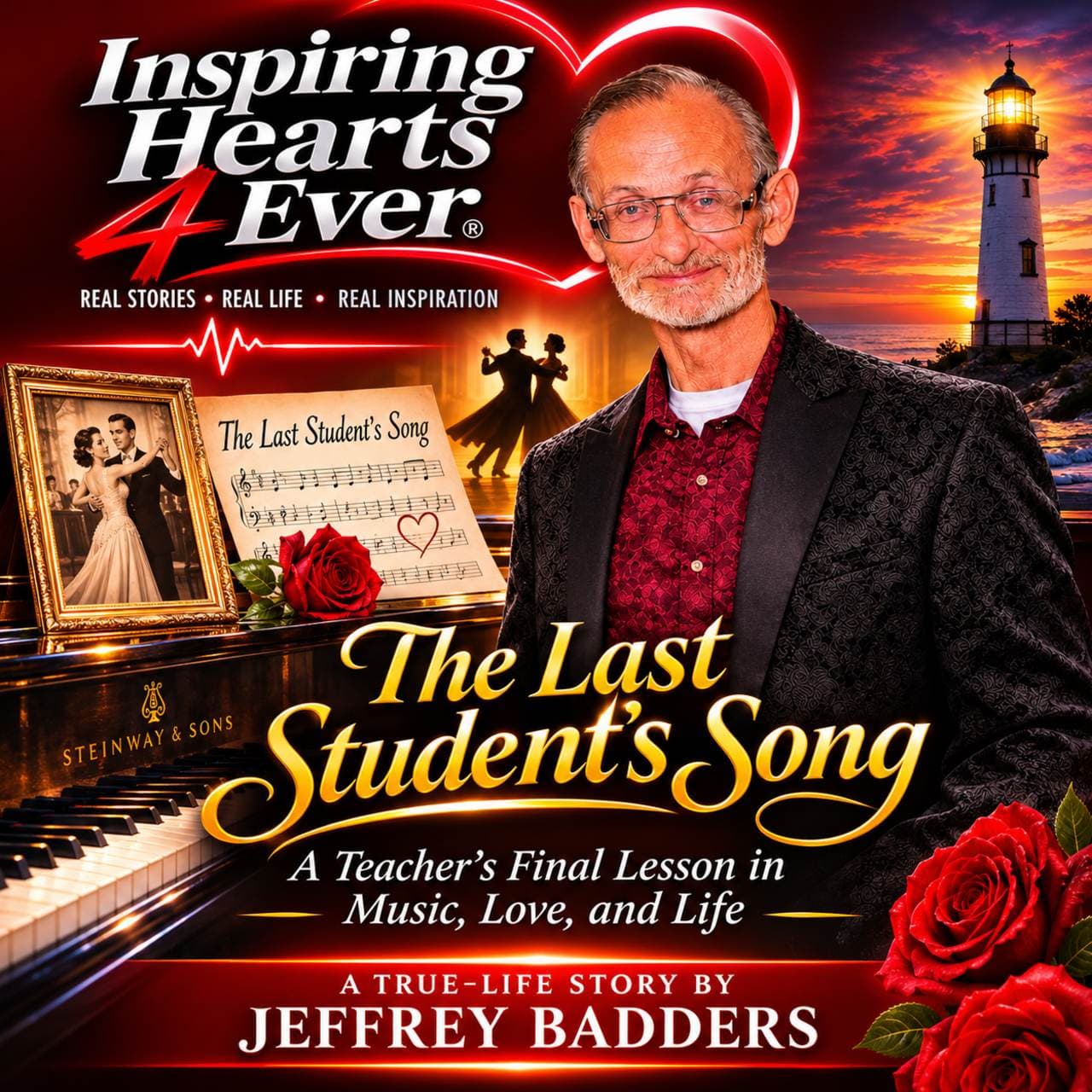
Inside her home was an expensive Steinway piano.
And when I first met her, she could still play it.
She could still sing.
Sometimes I would listen to what felt like her own private concerts.
One day, she asked whether I could sing.
I told her that when I was eight years old, I had sung "What a Friend We Have in Jesus" at a Methodist church.
She invited me to sit beside her at the piano.
Then she began playing "Amazing Grace."
And we sang together.
Afterward, she teased me that I had done okay, but I wasn't ready for the stage.
She wanted to help me improve.
But singing wasn't the only thing she wanted to teach me.
She wanted me to learn ballroom dancing.
She wanted me to become her last student.
Here was a woman who had spent decades teaching others.
And even though her health was changing, she still wanted to share what she loved.
A LIFETIME OF LOVE AND DANCING
As our visits continued, she began telling me about her husband.
They had met through ballroom dancing.
And when she spoke about him, tears ran down her face.
Her husband had passed away, but the memories of their life together remained.
She believed dancing could release negative energy and bring love into a person's soul.
The more I listened, the more I understood that dancing wasn't simply a profession to her.
It was connected to the man she had loved.
To the happiness they had shared.
And to the memories she carried.
Over time, she began showing me photograph albums.
We would sit at her kitchen table while she shared pictures from different chapters of her life.
Her childhood.
Her family.
Her college years.
Her years as a professor.
Her accomplishments and awards.
I listened as she explained the stories behind those photographs.
And I began seeing the woman beyond her illness, through the life she had lived.
That's something I believe is important when you're helping somebody approaching the end of life.
You don't enter their world and make everything about yourself.
You listen to their story.
Because you may only be there for a few hours, but they're the ones living through those changes every day.
Her son and daughter knew me, and they would sometimes ask when I was coming to visit.
As time passed, I continued learning about her life.
And she continued trying to teach me.
WHEN THE TEACHER BEGAN LOSING HER STRENGTH
Over the following months, her condition gradually declined.
Eventually, she transitioned from palliative care into hospice.
I continued helping her with her personal needs, including bathing, usually twice a week, often on Mondays and Fridays.
I wanted her to maintain as much dignity, privacy, and independence as possible.
But I could see the changes taking place.
The woman who had once played that Steinway piano was becoming weaker.
The woman who had sung with me was gradually losing her ability to sing.
And the woman who had spent decades teaching others was beginning to lose the strength to do the things she loved.
I remember one conversation in particular.
She told me:
"You know, I don't have that light in me anymore, Jeffrey."
I looked at her and said:
"You might not have that light in you, but I am your lighthouse until the end."
She smiled.
I've carried those words with me ever since.
A lighthouse doesn't stop the storm.
It doesn't control the waves.
It doesn't change the weather.
But it can still provide a light when somebody is trying to find their way.
That's what I wanted to be for her.
Because I couldn't give her back the strength she was losing.
I couldn't make her healthy again.
And I couldn't promise that she would someday return to the piano.
But I could continue being there for her.
I could listen.
I could respect her.
And I could treat her like the person she had always been.
A teacher.
A dancer.
A woman who had loved her husband.
A mother and grandmother.
A person whose life mattered.
Even as her condition continued to decline, there was something she kept asking me.
Had I written a song for her?
She hadn't forgotten about teaching me music.
And she hadn't forgotten that she wanted me to become her last student.
So I wrote her a song.
THE BIRTHDAY CELEBRATION
Her birthday celebration took place on a Friday, around noon, at the community center inside her gated community.
Her children and grandchildren had traveled from both coasts.
There was a birthday cake, photographs, and conversation.
By then, she had become very weak.
She arrived in a wheelchair.
She was wearing a beautiful corsage.
And although she was frail, she was alert.
I remember those sparkling blue eyes.
And I remember something else.
Beside her wheelchair, on a chair, was a framed photograph of her husband.
The man she had met through ballroom dancing.
The man she had told me about while we sat together looking through her memories.
The man whose memory had brought tears to her eyes.
Now, during her birthday celebration, his photograph was there beside her.
I thought about the life she had shared with me.
The years of music.
The dancing.
The teaching.
The love she had experienced.
And the memories she carried.
During the celebration, her family called me forward.
They spoke about the time I had spent listening to her and helping her.
Then they announced a surprise.
I was nervous.
Because I had written that song she kept asking me about.
And now I was going to sing it in front of her family.
I wasn't trying to impress anybody or prove that I was a professional singer.
I wanted to give something back to a woman who had shared part of her life with me.
So I sang.
MY ORIGINAL SONG
Sparkle in your eyes when you look at me I see angel face from above the love from your heart will always comfort me and the sound of your voice will humble me now , Im humble by her love the strength she show when the times got tough, so lets walk on down this road I give you my love I give you my soul. So take my hand your never walk Alone .
When I finished singing, she cried.
And that moment has never left me.
Here was a woman who had spent decades teaching people music.
She had invited me to sit beside her at the piano.
She had tried to teach me how to sing.
She wanted me to learn ballroom dancing.
And now, during her birthday celebration, I had the opportunity to sing something I had written just for her.
For months, I had listened to her.
Now she was listening to me.
And when I saw those tears, I knew that moment meant something to her.
I didn't know exactly how much time she had left.
But I knew I would always remember that birthday.
WHEN THE CELEBRATION WAS OVER
In the days following her birthday, I began seeing her condition decline again.
Looking back, I believe the energy she had during the celebration may have been what we sometimes call a rally.
During my years in hospice, I've seen people experience periods when they seem to have more energy, even though they're extremely frail.
Family members gather.
People visit.
There's conversation, excitement, and love.
And for a little while, the person seems stronger.
I sometimes think of it like putting fuel on a fire that was beginning to go out.
For a little while, that fire burns brighter.
But afterward, the person's condition may decline again.
That's how I remember her birthday.
Her family had come together.
She had participated in the celebration.
She had listened to the song I wrote for her.
But in the following days, I could see that she was becoming weaker.
I continued helping her.
Eventually, the hospice nurse estimated that she might have a week or less remaining.
She was receiving oxygen.
Her condition had changed significantly.
I remember speaking to her during that time.
She gave a slight nod of her head.
It wasn't a large movement.
Just a small nod.
I took it as recognition of my voice.
And that meant something to me.
Because even when someone can no longer speak the way they once did, I believe they still deserve to be spoken to with dignity and respect.
As her condition worsened, I began understanding that our time together was coming to an end.
ONE LAST ROSE
It was Tuesday, and my shift was coming to an end around five o'clock.
Her family was there.
Before I left, I wanted to thank them.
I wanted them to know how grateful I was for the opportunity and privilege of helping their mother.
Throughout my hospice career, I've had a tradition of making red paper roses from napkins.
It's something I do as a token of love.
I had red napkins in my backpack.
So I went into another room and made a rose.
Then I returned to her family.
I thanked them for allowing me to be part of their mother's life.
And I explained what the rose represented.
My heart.
My mind.
And my soul.
I told her daughter:
"You have a heart, you have a story. And you matter, and your mom matters, too."
When I handed her the rose, she began to cry.
I had wanted to leave the family with something that represented the appreciation I felt.
Not something expensive.
Not something elaborate.
Just a paper rose.
Something made with my own hands.
Then I went over to her mother.
Because there was one more goodbye I needed to make.
THE LAST TIME I HELD HER HAND
She was lying in a hospital bed in the large living room of her private home.
I went to her bedside.
And I held her hand.
I thanked her for everything.
I thanked her for trying to teach me how to dance.
I thanked her for trying to teach me how to sing.
And I thanked her for giving me the opportunity to be part of her life.
Then I told her that when she was ready to let go, it was time for her to sing.
I wished her well on her journey.
And I spoke about someday meeting again.
By that time, I had heard the breathing sounds I had come to recognize through my years in hospice.
What we sometimes call the death rattle.
In my heart, I believed her time was very near.
I knew I had to leave.
And I believed this would be the last time I saw her.
After holding her hand and saying goodbye, I walked out of her home.
I got into my car.
And I told myself:
"It's time to close this book because I know I won't see her anymore."
Those words have stayed with me.
Because when you enter someone's life, it's almost like opening a book.
You don't know all the chapters they've lived.
You don't know every struggle they've faced.
You don't know every dream they've carried.
But if they're willing to share their story, you get the privilege of reading some of those chapters.
And sometimes, you become part of one.
Eventually, though, the final chapter comes.
And you have to let go.
That Tuesday evening, I believed I had reached the final page of her story that I would be privileged to witness.
THE PHONE CALL
Later, her daughter called me.
She told me her mother had passed away after our final goodbye.
She thanked me for being there for her mother and her family.
And then she told me:
"We will always remember you."
I've carried those words with me.
But when I think about her mother, I don't first remember the hospital bed.
I remember the woman who sat at the Steinway piano.
The woman who sang "Amazing Grace" with me.
The woman who showed me photographs of her life.
The woman who cried when she remembered her husband.
And the woman who cried when I sang the song I had written for her.
Those are the memories that have stayed with me.
Because her illness was only one part of her story.
She had lived an entire life before I met her.
And I was privileged to share a small part of it.
WHAT THE LAST STUDENT LEARNED
When I think about that woman today, I think about what it means to truly listen to somebody.
I've spent much of my life entering other people's worlds.
And one thing I've learned is that not everybody understands somebody else's world.
You might spend a few hours helping someone.
You might assist them with bathing, getting dressed, or making sure they're comfortable.
But after you leave, that person returns to their own world.
And sometimes that world is a world of loneliness.
I understood something about loneliness long before I became a hospice aide.
As a foster child, I spent years searching for love.
And as I grew older, I discovered that I could give other people something I had spent so much of my childhood wanting.
I could give them my time.
I could listen.
I could show them that they mattered.
Love is a choice, not an emotion.
And love is stability and trust.
That's why I believe the way we treat people matters so much.
When someone is approaching the end of life, it's not the time to make their story about yourself.
It's their time.
Their spotlight.
Their stage.
She had spent decades teaching music and dance.
And even as her strength was fading, she still wanted to teach.
She wanted me to become a ballroom dancer.
I later became a salsa dancer through a separate experience, but I never forgot what she had wanted for me.
I never became the ballroom dancer she had hoped to teach.
But I carried something else away from our time together.
The importance of listening.
The importance of being present.
And the importance of remembering that every person has a story worth hearing.
She wanted me to become her last student.
And I was fortunate enough to be that student.
WHEN THE BOOK GOES BACK ON THE SHELF
I've walked with a lot of people during their final days.
And I've been privileged to enter many different lives.
Every person has their own story.
Their childhood.
Their family.
Their dreams.
Their accomplishments.
Their struggles.
Their regrets.
Their love.
And eventually, their final chapter.
When someone passes away, I have to put that book back on the shelf.
I cannot continue their life for them.
I cannot rewrite their past.
And I cannot change the ending.
But I can remember what they shared.
I can carry those experiences into the way I treat other people.
Someday, I'm going to be on that road myself.
Someday, I may be the person lying in a bed while someone else enters my world.
And when that day comes, I hope somebody takes the time to listen.
I hope they understand that I have a story, too.
That I wasn't always the person lying in that bed.
That I had dreams.
That I had experiences.
That I loved people.
That I made mistakes.
That I learned lessons.
And that my life meant something.
Because that's something we all have in common.
We all have a life filled with experiences that matter to us.
And none of us knows exactly when our final chapter will come.
So remember, someday we're all gonna walk down that road.
Don't take life for granted.
Appreciate everything you have at this moment.
Because someday, your ideas, your visions, your dreams, and your passion are things you're going to have to let go.
That is why I believe we should never wait until someone's final chapter to show them that their life matters.
We have that opportunity today.
We can listen today.
We can show love today.
We can give somebody our time today.
That woman spent her life teaching music.
She found love through ballroom dancing.
She shared her knowledge with students for decades.
And near the end of her life, she wanted to teach one more.
She gave me a lesson that went far beyond music.
She reminded me that even when someone is losing their strength, they still have something to give.
And sometimes the most meaningful thing we can offer in return is to receive that gift with an open heart.
She gave me the privilege of listening to her story.
And I gave her a song.
A song she heard surrounded by the people she loved.
A song that brought tears to her eyes.
And a song I will never forget.
Because sometimes, when the music finally stops, the love behind it continues.
And the memories remain.
A CLOSING WORD FROM JEFFREY
Don't fake it until you make it. Faith it until you make it.
The foundation is built through discipline. The legacy is created through action.
The darkness built the foundation; our actions bring the legacy into the light.
AUTHOR’S NOTE — A TRUE-LIFE TESTIMONY
This story is based on my personal experience with a music and dance teacher during the final months of her life in the San Diego area of California.
When I first met her, she was receiving palliative care. As her condition declined, she transitioned into hospice. Her identity has been protected out of respect for her and her family.
The original song included in this story was written by Jeffrey Badders and has been preserved exactly as recorded in his testimony, without rewriting or correcting the original lyrics.
This story reflects my personal memories, conversations, experiences, and lessons from the time we shared.
Written collaboratively by Jeffrey Badders with AI writing and editorial assistance.