


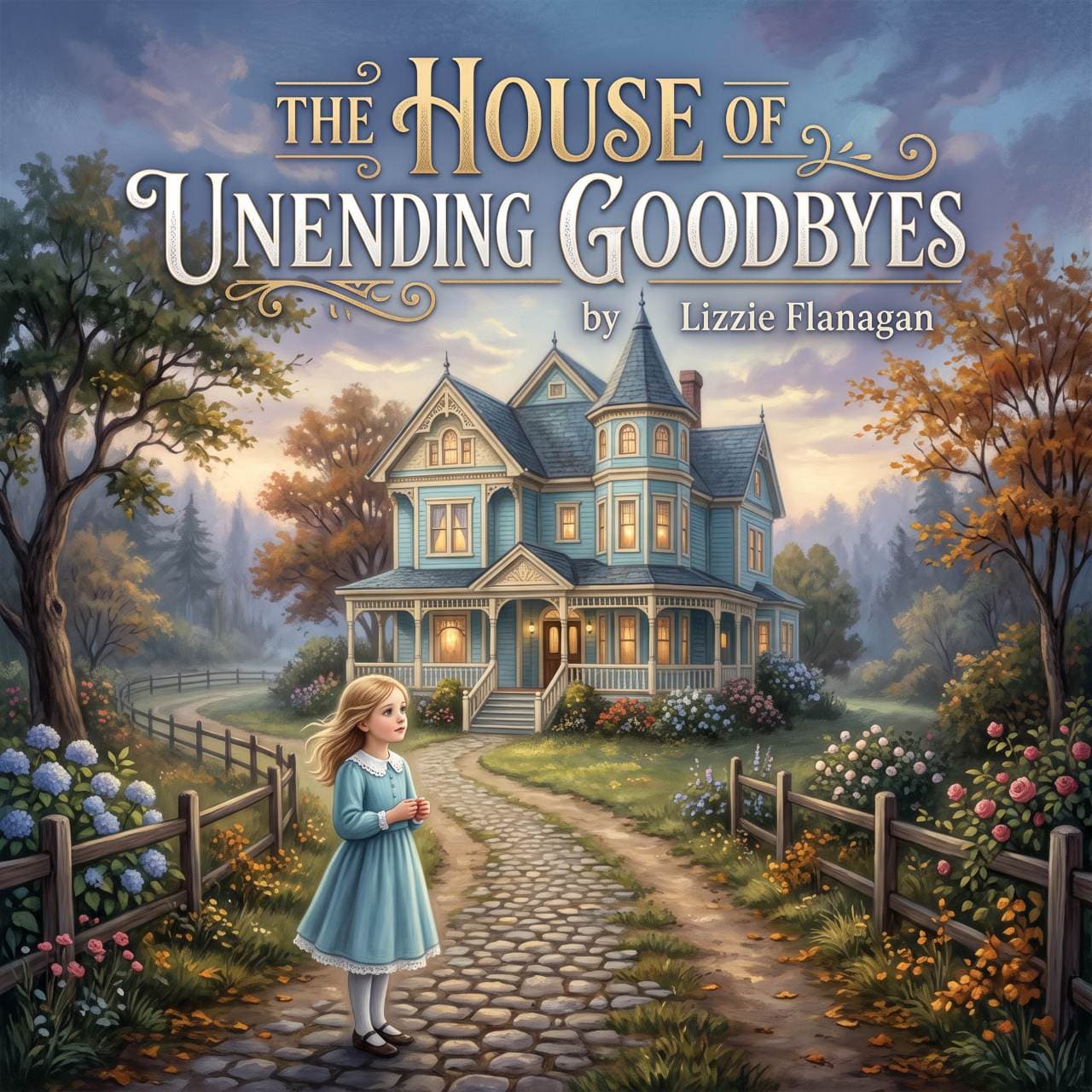

In 1876, a new child arrived, and he challenged everything Irene thought she knew about the house.
His name was Yusuf, and he was eleven years old. He had died in a factory accident in Pennsylvania, his arm caught in machinery that should have been guarded but wasn't. He was the son of Turkish immigrants, Muslim, devout in a way that Irene had never encountered.
He came to the meadow angry. Not frightened, like most children, but furious. He stood in the gray light with his arms crossed, refusing to move, refusing to speak.
"You're safe," Irene said, approaching him cautiously. She was still seven in appearance, but she had been in the house for twenty-nine years. She had collected dozens of children. She knew how to handle grief.
"I am not safe," Yusuf said. "I am dead. This is not safety. This is punishment."
"Why do you think it's punishment?"
Yusuf looked at her with dark eyes that held centuries of theological certainty. "I died without saying the Shahada properly. I died in a state of sin. I was angry at my father that morning. I didn't pray Fajr. I rushed out of the house without breakfast, without blessing. And now I am dead, and this is Barzakh, and I am being tested."
Irene sat down the not-grass beside him. "What is Barzakh?"
"The isthmus," Yusuf said. "The barrier between worlds. In my faith, when you die, you wait in Barzakh until the Day of Judgment. The righteous experience it as a garden. The wicked experience it as a prison." He looked around the meadow, at the gray light. "This is neither. This is... something else."
"It's a house," Irene said. "A blue house. It waits with you. It keeps you safe until your family comes."
"My family," Yusuf said, and his anger cracked, showing the grief beneath. "My mother will be devastated. I am her oldest son. I was going to take care of her. I was going to send my sisters to school. And now I am dead, and I have failed them."
"You didn't fail them," Irene said. "You were killed. There's a difference."
"In my culture, there is no difference," Yusuf said. "A son's duty is to protect his family. To provide. I have failed in that duty. I am not a martyr. I am just... dead."
Irene didn't know how to comfort him. She had dealt with Catholic guilt, with Jewish uncertainty, with Protestant doubt. But this was different. This was a child who believed he had failed not just his family, but his God, his duty, his very purpose for being.
"Come to the house," she said. "See it. If it's a prison, you can leave. If it's a garden, you can stay. But see it first. Make your judgment after you've seen."
Yusuf considered this. He was a thoughtful boy, serious beyond his years. Finally, he nodded. "I will see. But I make no promises."
He stood, and Irene led him through the meadow, up the path, to the blue Victorian. When he saw it, he stopped. He stared. He whispered something in Arabic that Irene didn't understand.
"What did you say?" she asked.
"I said, 'Subhanallah,'" Yusuf replied. "Glory be to God. This house... it is like the descriptions of Jannah. The garden. The peace. The light."
"It becomes what you need it to be," Irene said. "What do you need, Yusuf?"
Yusuf closed his eyes. When he opened them, the house had shifted. Now there was a minaret, a small dome, a room with a prayer rug facing east. The call to prayer seemed to echo from somewhere, though there was no muezzin.
"I need to pray," Yusuf whispered. "I need to ask forgiveness. I need to make sure... to make sure I'm not forgotten."
"You won't be forgotten," Irene promised. "The house doesn't let anyone be forgotten."