


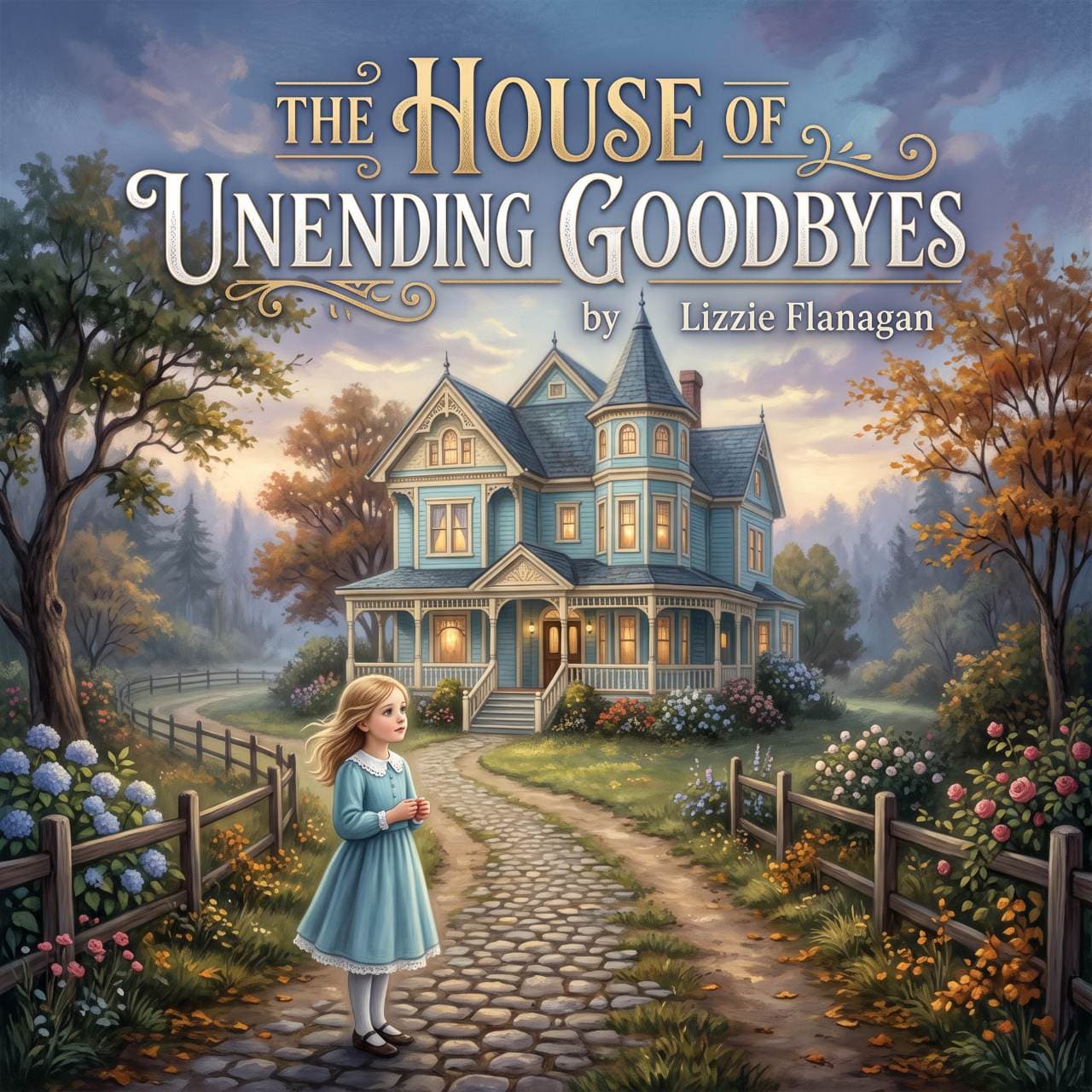

The blue Victorian still stands at the end of Old Mill Lane. You can't find it on any map, and if you try to walk there, you'll find only a meadow full of wildflowers.
But if you're a child who has wandered too far, who has crossed the bridge before your time, who stands in the gray space between worlds confused and frightened—then you'll see it. You'll see the gate, and the path, and the porch light glowing welcome.
And you'll see her. Not Irene—she's gone home, finally, mercifully gone home—but the others. Maria, wise and kind. David, gentle and patient. Hundreds of children, spanning centuries, all waiting to help you.
They'll take your hand. They'll lead you inside. They'll give you a room that becomes what you need it to be. They'll help you write your message, prepare your heart, wait for the parents who will eventually come.
And when your parents do come—old and gray and shuffling, carrying the weight of years without you—they'll be ready. They'll understand. They'll hold you, finally, and you'll tell them:
I love you. I'm sorry. I'm okay. It wasn't your fault. I forgive you. I forgive myself. I'm ready to go home.
The house will remain as long as children die before their time. It will remain as long as love outlasts death. It will remain, blue and beautiful and impossible, a monument to the waiting, to the goodbye, to the hope that every ending is just a prelude to a greater hello.
And somewhere, in the light beyond, Irene Whitmore watches. She sees every child who finds the house. She sends them her blessing. She whispers to the new Collectors:
Be kind. Be patient. Be ready to let them go. And when your own waiting is done—when you've said all the goodbyes you need to say—come find me. I'll be here. I'll always be here. Waiting for you in the light.