


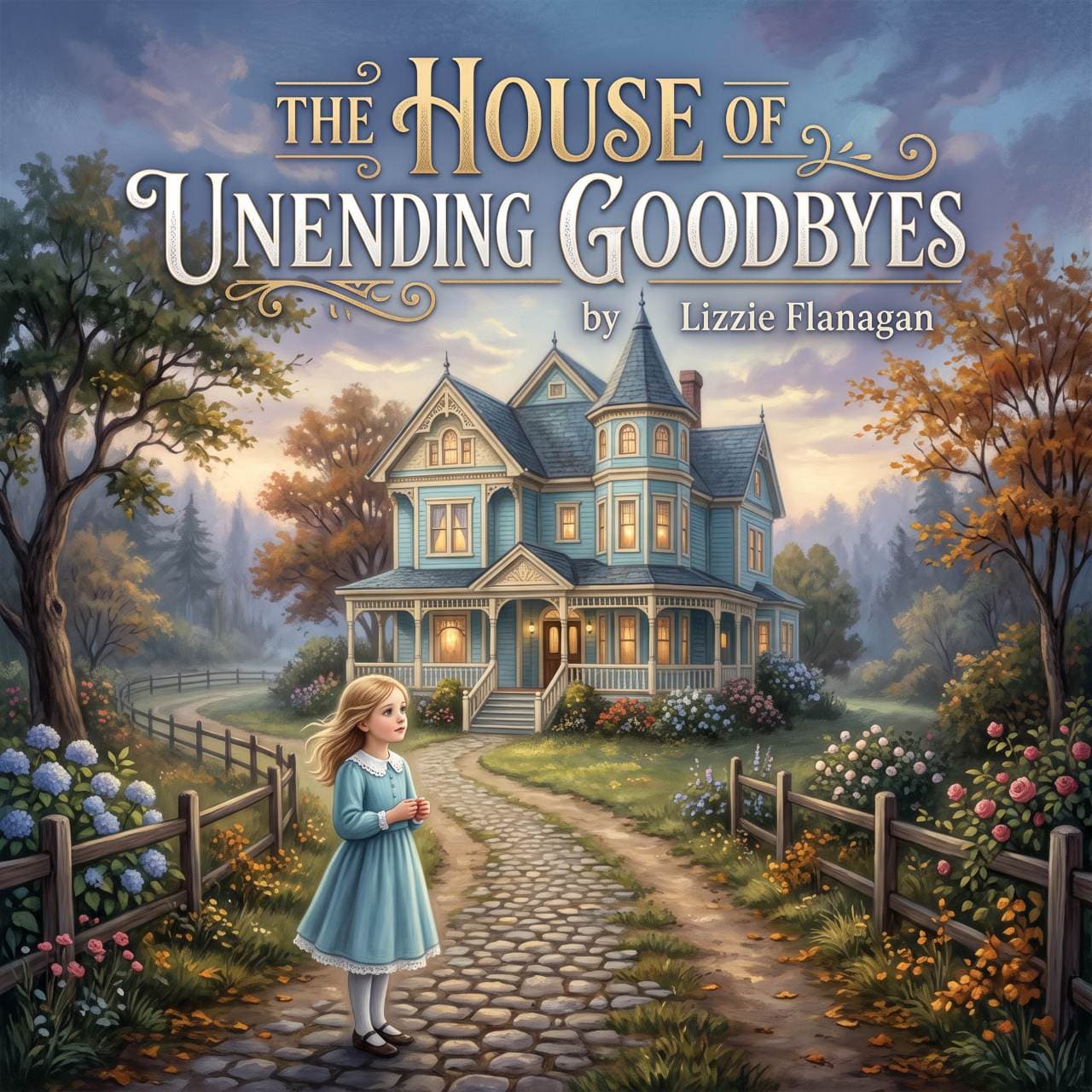

Irene stood at the gate of the blue house, looking back at the only home she had known for more than one hundred years. The children were gathered on the porch, on the lawn, in the windows—hundreds of them, spanning centuries, wearing clothes from every era, holding the objects that had crossed with them, the talismans of their deaths.
"I'm leaving," Irene said. Her voice was small but strong. "I'm going to find my mother. I'm going home."
"Who will collect us?" asked a boy who had arrived just yesterday, killed in a car accident, confused and frightened.
"Maria will collect you," Irene said. "And David, when he returns from the light. And Annabelle, if she chooses to stay. And all the others who have learned what I taught them. The house doesn't need me anymore. It never needed me. It just needed someone to believe in it. And you all believe now. You can keep it alive without me."
Annabelle stepped forward. She looked different—lighter, younger, as if the revelation they had shared had already begun to free her. "I'm coming with you," she said. "If you'll have me. I think... I think I'm finally ready to see my parents. To ask their forgiveness. To accept that I already have it."
"Then let's go together," Irene said.
They walked down the path, hand in hand, the small girl in the blue dress and the woman who had been a girl for 181 years. Behind them, the house began to change. It didn't fade—it would never fade, not while children needed it—but it shifted, becoming less a prison and more a true waystation. The blue deepened, became richer, more welcoming. The windows glowed warmer.
Maria stood at the gate, watching them go. She was the new Collector now, though she wouldn't bear the title alone. It would be shared among all the children who had learned, who had grown, who had healed. The house would become a place of preparation, not of endless waiting. A place where souls learned to let go, rather than holding on.
Irene and Annabelle walked through the meadow, past the wildflowers, past the gray spaces. They walked toward the deeper light that had waited for them for nearly two centuries. And as they walked, Irene felt the weight lifting from her soul—the guilt, the grief, the desperate need to be worthy.
She was worthy. She had always been worthy. She was Irene Whitmore, daughter of Catherine, sister of Emily, ancestor of hundreds. She was the first Collector, the keeper of the house, the savior of lost children. And she was forgiven. She forgave herself.
The light grew brighter. And in the light, she saw them—her mother, young and healthy and whole, her arms open, her face radiant with joy. Annabelle's parents too, waiting with tears in their eyes, ready to welcome their daughter home.
"Mommy," Irene whispered, and she ran.
She ran like she hadn't run in all the years since her death. She ran like the child she had been, the seven-year-old girl who had died of fever and had never stopped being seven, not really, not in her heart. She ran into her mother's arms, and Catherine caught her, lifted her, held her close.
"My baby," Catherine whispered. "My Irene. I've been waiting. I've been waiting so long."
"I know," Irene said, crying light that mingled with her mother's light, becoming something new, something beautiful, something eternal. "I'm sorry. I'm sorry I took so long."
"You came," Catherine said. "That's all that matters. You came home."
And Irene, finally, after years of waiting, after collecting hundreds of souls, after building a house that didn't exist to hold the grief of the world, finally understood:
The waiting was over.
The goodbye was complete.
And the hello— the eternal, unending hello—had just begun.