


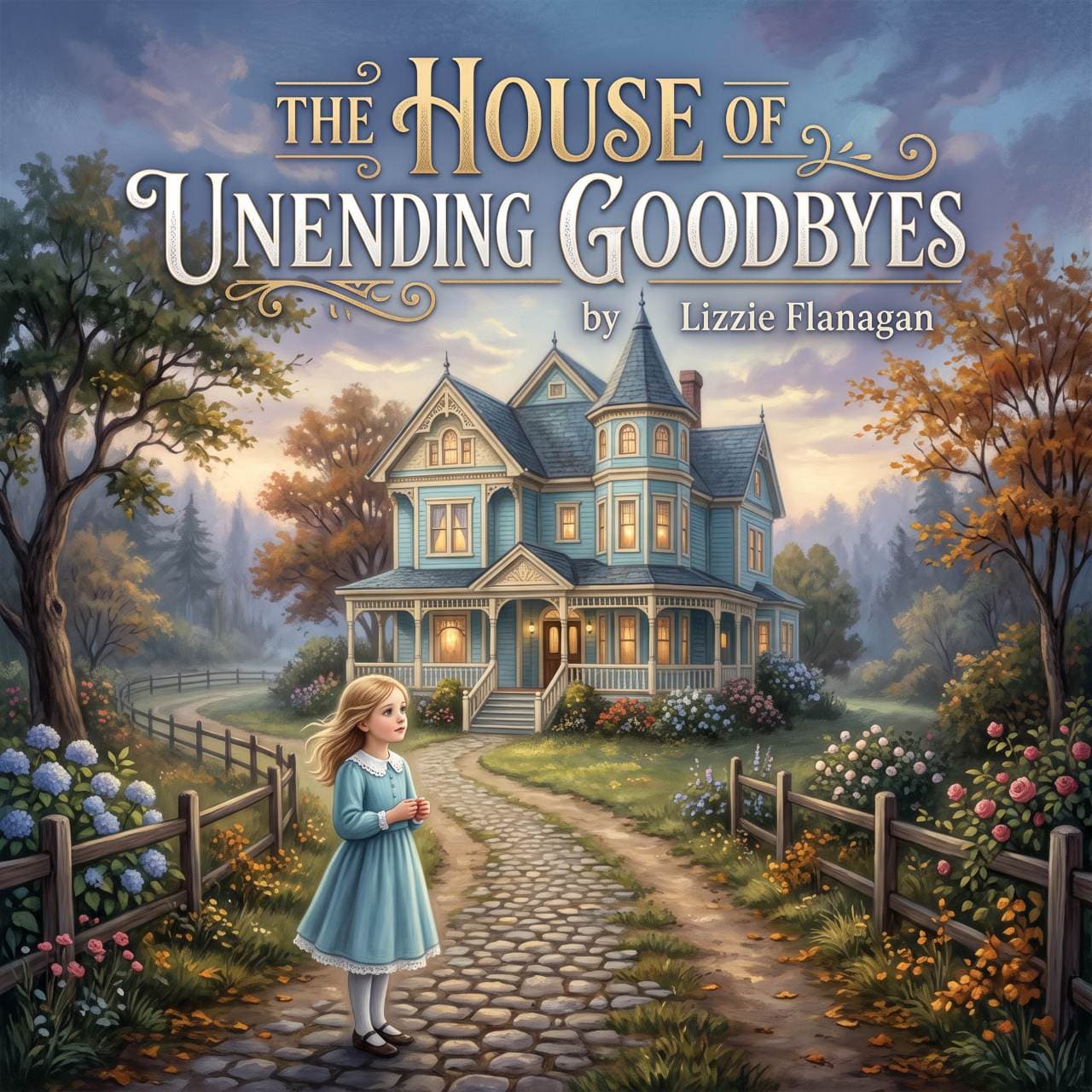

By the year 2000, the house had become a museum of memory, a cathedral of grief, a palace of waiting. It contained over three hundred children, spanning a hundred and fifty years of history, representing every faith and culture and philosophy that had existed in that time.
And it was filled with objects. Not just the objects the children brought with them, but the objects the house created from memory, from longing, from the desperate need to hold onto what was gone.
There was the Room of Shoes, where the shoes of every child who had died in the Holocaust were preserved, polished, kept safe. There was the Library of Lost Books, containing every book that had been burned, banned, or forgotten. There was the Gallery of Photographs, walls covered in images of the families who were still waiting, still living, still aging in the world beyond the meadow.
Irene walked through these rooms every day. She touched the objects. She remembered the children who had owned them. She kept the memories alive, because she knew that if she stopped remembering, she would fade, and if she faded, the house might fade with her.
But she was tired. She had been waiting 153 years. She had collected over three hundred children. She had facilitated hundreds of reunions. She had become a legend in the spaces between worlds, a small girl in a blue dress who appeared when children died, who took their hands and led them home.
And she was ready. She didn't know it yet, but she was ready to let go.