


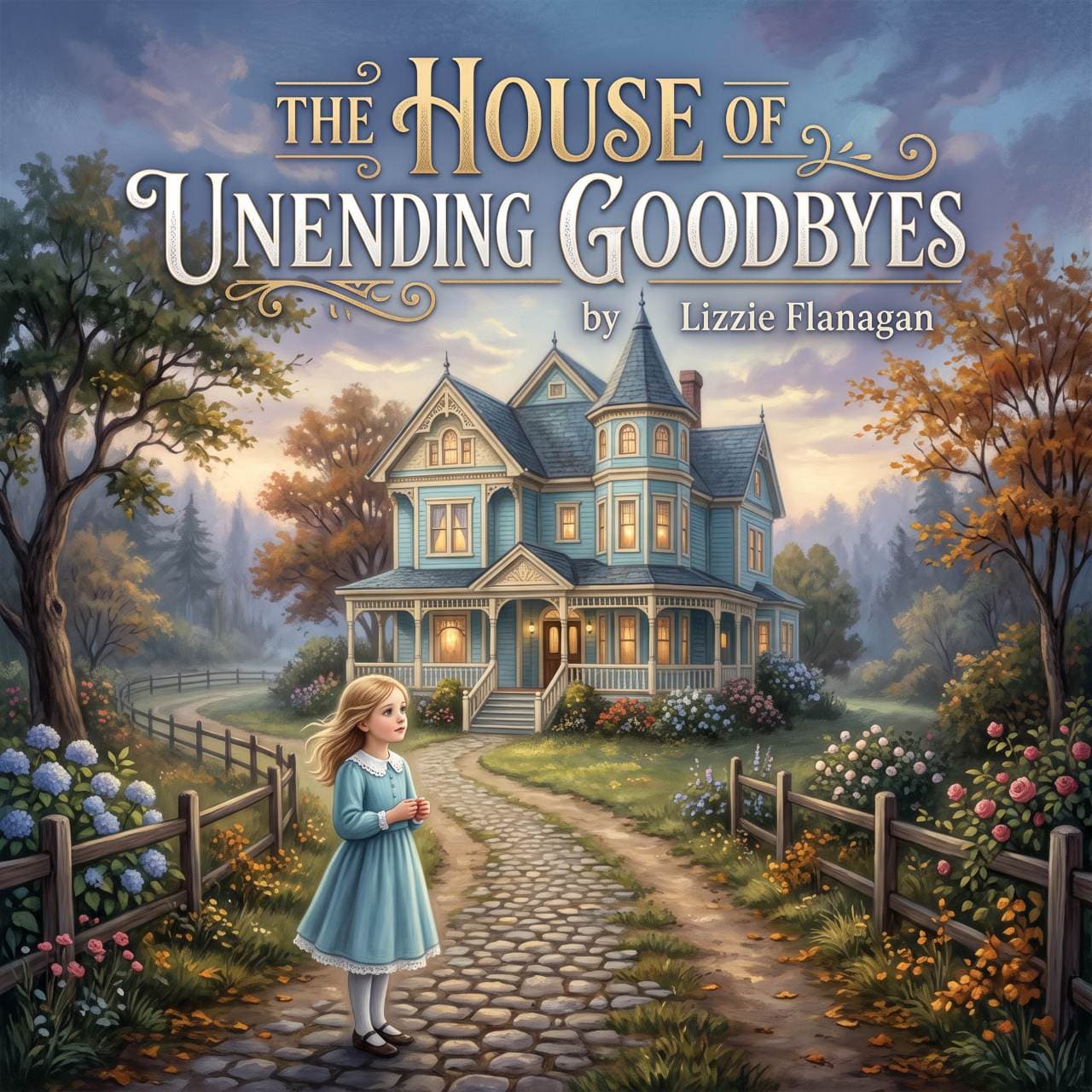

In 1890, a child arrived who believed in nothing.
Her name was Clara, and she was ten years old. Her parents were intellectuals, socialists, atheists who had rejected all religion as "the opiate of the masses." They had taught Clara to believe in science, in reason, in the material world. Death, they had taught her, was the end. There was no afterlife, no soul, no continuation.
When Clara died of appendicitis—a death that could have been prevented if her parents had believed in doctors rather than homeopathy—she came to the meadow confused, angry, betrayed.
"This isn't real," she said, when Irene approached her. "I'm hallucinating. I'm dying, and my brain is creating comforting images before it shuts down."
"You're not dying," Irene said gently. "You've already died. This is real. I'm real."
"You're a seven-year-old girl in a blue dress," Clara said. "You're a stereotype. A construct. My brain is drawing on cultural imagery of innocence and death. This isn't real."
Irene had never encountered this before. She had dealt with children from every faith, every culture, but they had all believed in something. They had all had a framework for understanding death, even if that framework was challenged by the reality of the house.
Clara had nothing. Just the void. Just the end.
"Come to the house," Irene said. "See it. If it's a hallucination, it will fade. If it's real... you'll know."
Clara went, skeptical, analytical. She examined the house with the eyes of a scientist, looking for inconsistencies, for evidence of unreality. She found none. The house was solid. The books had words in them. The food had taste. The other children were distinct individuals with their own stories, their own beliefs, their own realities.
"This doesn't prove anything," Clara said, after a month in the house. "I could be in a coma. This could be a persistent vegetative state with complex dream activity."
"Does it matter?" Irene asked.
Clara stared at her. "What do you mean?"
"Does it matter if it's a dream or real? You're here. You're conscious. You have experiences. You can learn, grow, love, wait. Does the ontological status of the experience change its value?"
Clara was silent for a long time. "My father used to say that," she whispered. "He was a philosopher. He said that reality is what we experience, not some abstract 'thing-in-itself.' I thought he was being romantic. I thought science was more important than philosophy."
"Maybe they both matter," Irene said. "Maybe the house is real and a dream. Maybe it's science and magic. Maybe it's everything, because it needs to be everything to be a home for everyone."
Clara stayed in the house for sixty years. She became its philosopher, its questioner, its skeptic who kept the others honest. She challenged the theological assumptions of the Christian children, the metaphysical certainty of the Buddhist arrivals, the cultural dogmas of everyone.
And when her parents came—her father in 1945, her mother in 1948, both old, both broken by the wars and the suffering of the twentieth century—they found their daughter still ten, still questioning, still demanding answers.
"Is this heaven?" her father asked, looking around the library that Clara had constructed, filled with books of philosophy and science.
"It's a house," Clara said. "A house that shouldn't exist, but does. A house that collects lost children. A house that waits."
"I was wrong," her father whispered. "About everything. About death. About God. About the soul."
"Maybe not wrong," Clara said. "Just incomplete. There's more than we knew. More than we could know. But the more doesn't negate what we did know. Science is still true. Reason still matters. It's just... bigger than we thought."
They stayed in the house for years, the three of them, discussing philosophy, theology, the nature of reality. They never reached conclusions, but they reached peace. And when they finally walked down the path, they walked as a family, united not by belief but by love, by the acceptance that some questions have no answers, and that is okay.