


“Sometimes the greatest turning point in life isn’t discovering who someone else really is. It’s discovering who you become when everything you believed changes.”
Have you ever spent years waiting for someone to answer a question that had followed you through your entire life?
And what would you do if, when you finally stood before that person, they refused to give you the answer?
For much of my childhood, there was a question I couldn't escape.
Why?
Why had my life turned out the way it did?
Why had I been a ward of the state from birth?
Why had I lived in ten different foster homes?
And why hadn't my father been there?
As a little boy, I didn't have the knowledge or experience to understand everything happening around me.
But as I grew older, those unanswered questions grew with me.
Eventually, I reached a point in my adulthood when I had an opportunity to confront one of them.
I was going to meet my father.
The Road to Salina
I had been staying with my Aunt Chris in Cunningham, Kansas.
After everything I had experienced, including my time working on a custom-cutting crew and the trouble I had gotten into in Oklahoma, my life was changing again.
My aunt had reached a point where she wanted me to move out.
I had a 1982 Honda Shadow motorcycle and a duffel bag.
And I had something else.
An address.
My Aunt Chris had given me the address where I could find my father in Salina, Kansas.
For someone who had grown up without the relationship I wanted with my father, that address represented more than a place on a map.
It represented an opportunity.
Maybe I could finally understand something about my childhood.
Maybe I could hear his side of the story.
Maybe I could begin putting together some of the missing pieces of my life.
But there was one thing I couldn't know.
Whether my father wanted to have that conversation.
The Man in the Recliner
I remember arriving in Salina.
It was hot, somewhere around ninety degrees.
I had ridden my motorcycle to the address my aunt had given me.
And there he was.
My father was sitting in a recliner, drinking iced tea.
Think about that for a moment.
After all those years, after ten foster homes, after growing up with questions about my family, I was finally standing in front of the man who could possibly explain part of my beginning.
He looked at me.
And he asked:
“Who are you?”
I answered:
“I’m your son Jeffrey, your youngest.”
There it was.
The introduction I had never imagined I would have to make.
A son introducing himself to his own father.
I hadn't traveled there looking for money or possessions.
I wanted something that couldn't be purchased.
I wanted to know why.
I wanted to understand.
And perhaps, somewhere inside me, I wanted the opportunity to have a relationship with my father.
But the conversation didn't go the way I had hoped.
The Answer That Wasn't an Answer
My father told me:
“You’re a grown man now… I have no explanation… we’re done talking.”
Those words left me without the answers I had traveled there to find.
I had finally located my father.
I had introduced myself.
I had opened the door to a conversation that had been missing from my life.
And that conversation was over.
What do you do when the person you believe holds a missing piece of your life refuses to share it?
For me, the meeting became another experience I would have to carry forward.
I couldn't make my father explain the past.
I couldn't force him to give me the relationship I had wanted.
And I couldn't go backward and change the childhood I had already lived.
But I still had choices about the man I was becoming.
The Man Behind the Questions
There were things about my father I came to know.
He had worked running a sawmill.
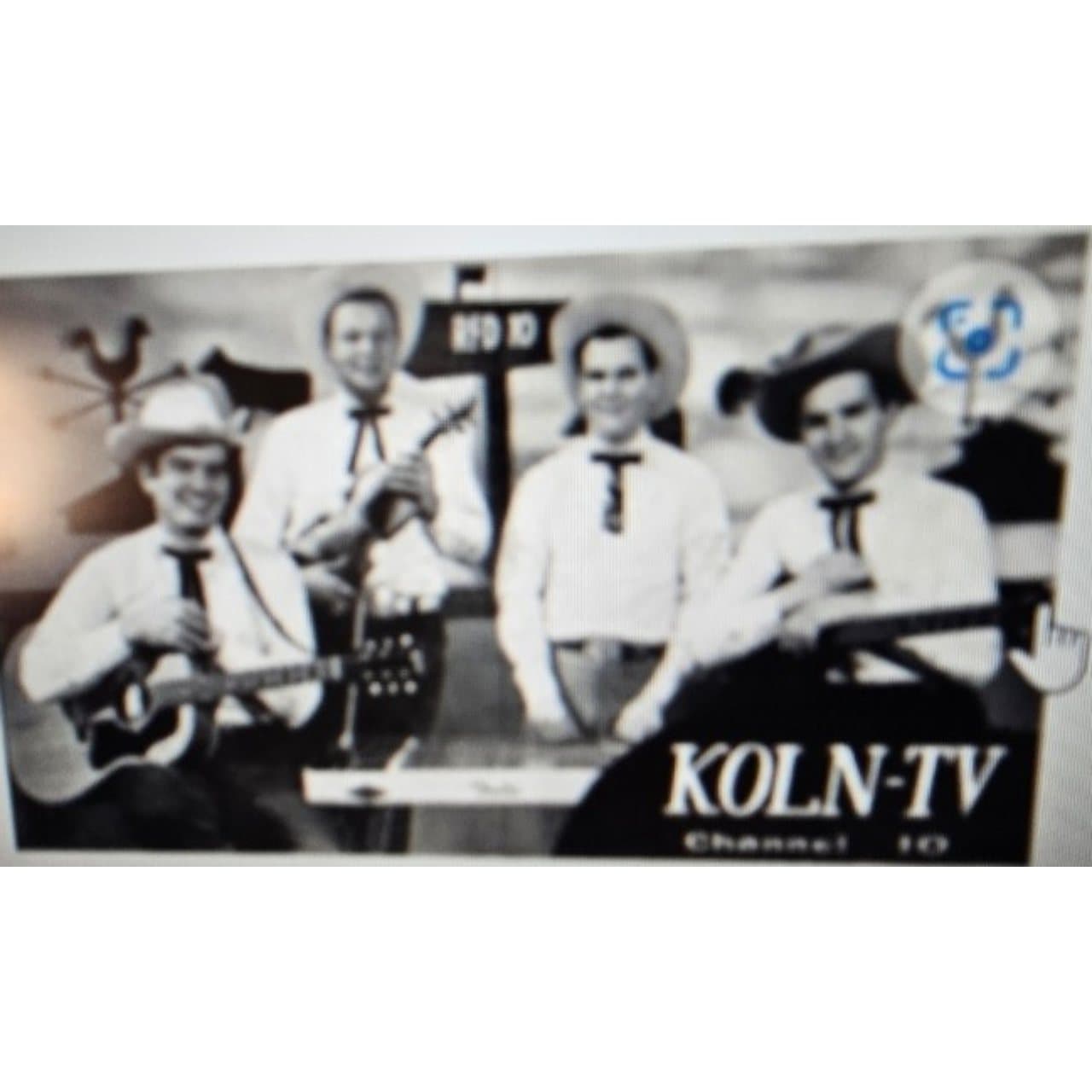
He was also a musician.
He played the violin, and I learned that Aunt Blanche had taught him violin and piano. He had lived with her for much of his childhood.
I knew of his band as The Lug Nuts.
And there was a photograph.
An old black-and-white photograph from KOLN-TV, showing four musicians together.
One of those men was my father.
The photograph showed a part of his life I had not experienced with him.
There was a musical side to this man. A history. A life that had unfolded while I was growing up somewhere else.
Looking at that photograph brings another dimension to my father's story.
He wasn't simply the man who had refused to answer my questions.
He was also someone with a past of his own.
But knowing pieces of someone's history doesn't necessarily explain the decisions they made.
And it doesn't erase the consequences those decisions had on someone else's life.
That was something I would have to come to terms with.
The Questions That Followed Me
For years, I wondered why my life had to turn out the way it did.
I had experienced rejection, uncertainty, and the challenges of growing up without the stability that so many children need.
There were times when I wanted answers from other people because I believed those answers might help me understand myself.
But as I continued through life, my perspective began to change.
I came to realize that my life had a purpose.
I began to understand my experiences through my faith and what I believed God wanted me to do with the life I had been given.
That didn't mean the past had never happened.
It didn't mean the questions had been answered.
And it didn't mean the pain of rejection had never existed.
It meant I had to decide what I would do with those experiences.
Would I allow unanswered questions to determine the rest of my life?
Or would I take what I had lived through and try to make something meaningful from it?
I couldn't change the father I had.
But I could take responsibility for the man I wanted to become.
The Legacy I Could Choose
As I look back on my journey, I think about that young man arriving in Salina on his motorcycle.
He had traveled there hoping to find something.
He found his father.
But he didn't find the explanation he had been seeking.
And yet, that meeting became part of a much larger journey.
My life would eventually take me into caregiving, hospice work, and opportunities to make an impact on other people's lives.
I learned that a person's legacy isn't measured only by what happened to them.
It is also measured by what they choose to do afterward.
I could not rewrite my childhood.
I could not make my father give me the answers I wanted.
But I could choose how I treated other people.
I could choose compassion.
I could choose forgiveness.
And I could choose to make an impact on someone's life, even if that impact was small.
Because I came to believe something important:
“Your legacy isn't only what you've survived. It's also what you've chosen to do with the life you have today.”
One Last Question
Sometimes I think about the photograph of my father with those musicians.
A moment captured in time.
A piece of his history that still exists.
And I think about that young man who traveled to Salina hoping to understand his own history.
He wanted answers.
What he eventually learned was that his future could not depend entirely on receiving them.
I had spent so much of my early life asking why things had happened to me.
As I grew older, I began asking a different question.
What was I going to do with the life I had today?
And now I want to leave you with something to think about.
Have you ever waited for someone to give you an explanation, an apology, or the closure you believed you needed—and discovered that you might have to move forward without ever receiving it?
If you have, what did that experience teach you about yourself?
---
Author's Note — A True-Life Testimony
Everything shared in this memoir is based on my real-life experiences, personal memories, and honest testimony.
I personally participated in interviews, answered questions, shared my memories, and described the emotions and lessons I experienced throughout my life.
AI was used as a writing and editorial assistant to help organize my interviews, develop the narrative, improve readability, and bring my personal testimony together into a complete story.
AI did not live these experiences or create the events of my life.
Written collaboratively by Jeffrey Badders with AI writing and editorial assistance.
Inspiring Hearts 4 Ever — True-Life Stories