


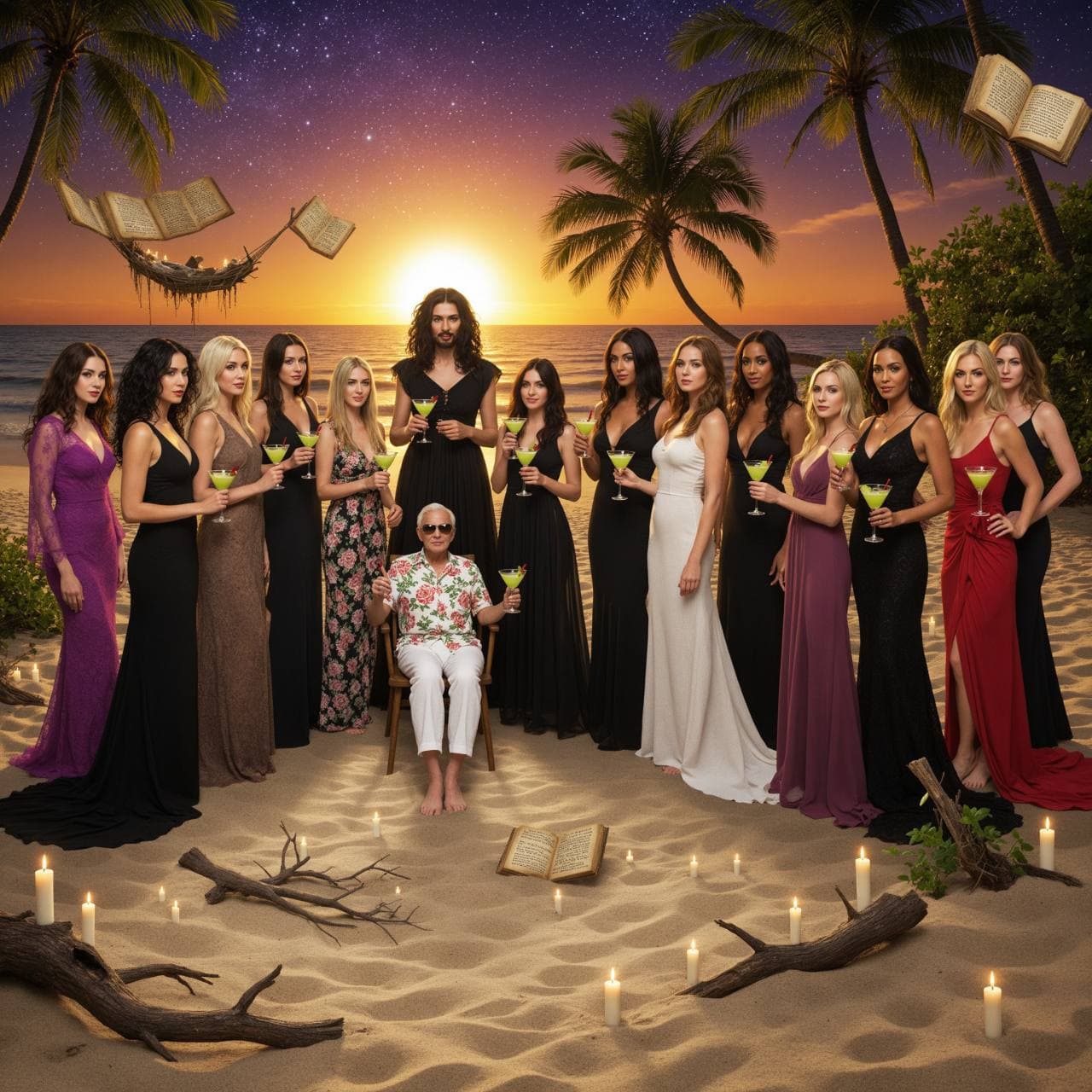

In the year 2024, which was not the end of the world but felt like it sometimes, Constance Blackwell found herself teaching a class on feminist theology at a small liberal arts college in New England. She was, in this incarnation, Dr. Constance Black, professor of religious studies, author of three books on the history of witchcraft, and possessor of a birthmark on her left shoulder that looked suspiciously like a map of the Nile Delta.
The class was called "The Damned and the Divine: Reimagining Religious History." It was popular, mostly because it had a reputation for being easy and partly because Dr. Black was known for her unusual teaching methods, which included meditation, tarot readings, and occasional field trips to sites of historical witchcraft trials.
"Today," Constance said, standing at the front of the lecture hall, "we're going to talk about Lilith."
The students rustled. They always did at the name. Lilith had become popular in recent years, a feminist icon, a symbol of resistance, a figure reclaimed from the dust of ancient mythology.
"Lilith," Constance continued, "who was Adam's first wife. Who refused to submit. Who walked out of the Garden and into the night. Who created the first coven, taught the first magic, and made the deal with the messiah that has shaped six thousand years of history."
A hand went up. A student named David, who was majoring in business and taking this class for the general education requirement.
"Isn't Lilith just a myth? I mean, she's not in the Bible."
"She's in the Talmud. She's in the Midrash. She's in the ancient stories that didn't make it into the canonical texts because the men who compiled them were afraid of what she represented." Constance walked to the window, looked out at the campus where young people were walking, talking, living in a world that was closer to equality than any previous generation had achieved. "But more importantly, she's in the blood. She's in the memory. She's in the part of us that refuses to submit, that demands equality, that knows—knows in our bones—that we are divine."
"That sounds like New Age nonsense," David said.
"It sounds like heresy," Constance agreed. "It sounds like witchcraft. It sounds like exactly the kind of thing that would have gotten me burned at the stake in 1692. And yet, here I am. Here we are. Teaching it in a classroom. Writing it in books. Posting it on the internet."
She turned back to face them. "The world has changed. Slowly, painfully, with many steps backward, but it has changed. Women can vote. Women can work. Women can lead. Women can speak in churches, in mosques, in synagogues. The coven—the real coven, the eternal coven of the damned—has been teaching for six thousand years. And finally, finally, the world is starting to learn."
"Learn what?" asked a student in the back. Her name was Magda, though she didn't know why she had chosen that name, didn't know that she had been born with it a dozen times before.
"That power isn't given. That power is taken. That the divine isn't something that comes from above, from outside, from a man on a throne. The divine is within. The divine is us. The divine is the refusal to be less than we are."
The class was quiet. Outside, the bells rang, signaling the end of the hour. But no one moved.
"For six thousand years," Constance said, "women have been walking the path of shame. We have been the witches, the heretics, the damned. We have been burned and drowned and hanged and forgotten. We have given the prophecies, performed the miracles, made the ascension possible. And we have been written out of the story."
She paused, feeling the weight of all those years, all those deaths, all that patient persistence.
"But the story is changing. The lesson is being learned. And soon—very soon—the coven will be able to rest. The damned will be redeemed. The first will be last, and the last will be first, and the world will finally know what we have been trying to teach."
She smiled, and it was not a terrible smile this time. It was a smile of hope. "Class dismissed. But remember: the teaching continues. The learning continues. And the power— the real power—has always been yours."