


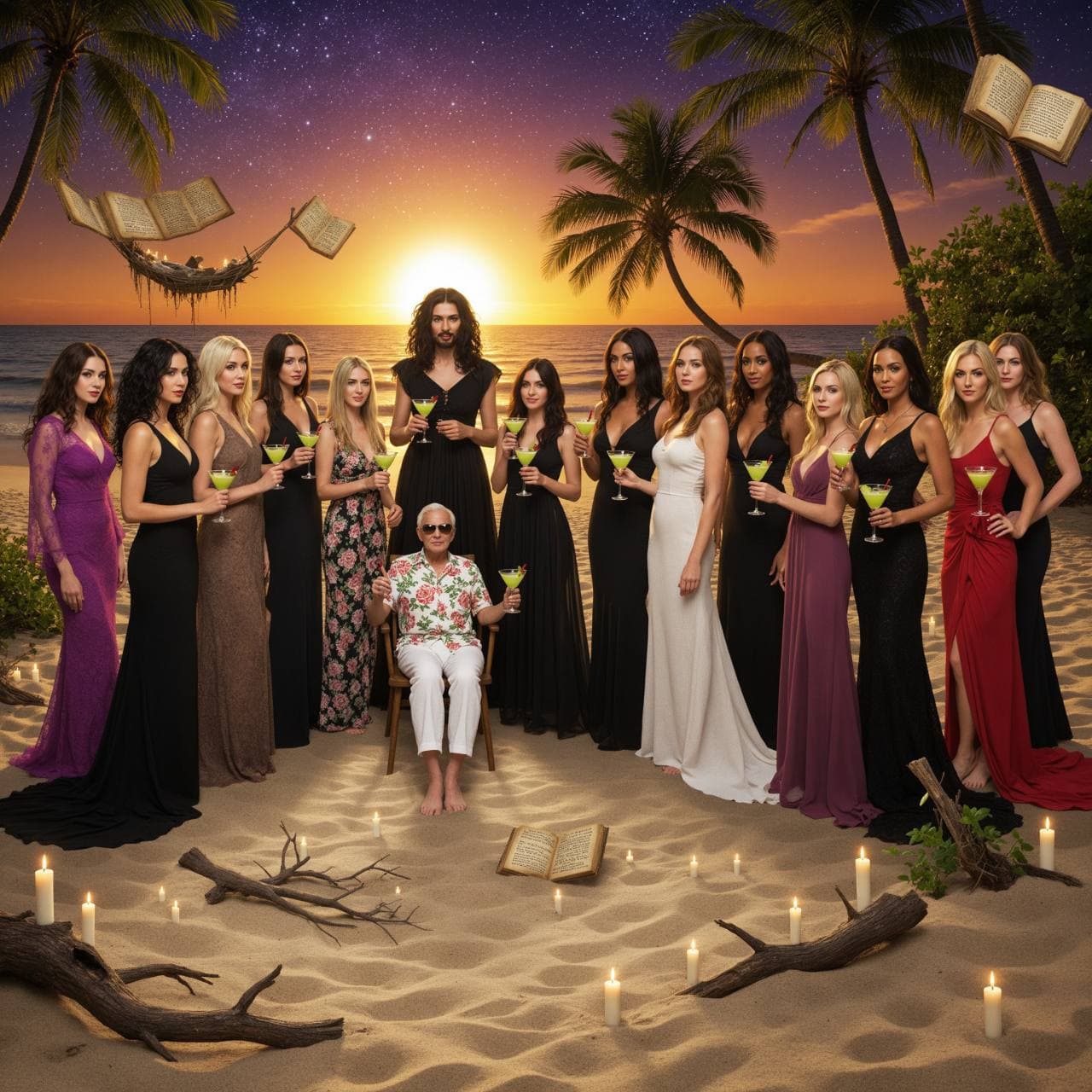

Magda took charge of the archive, because someone had to, and because she had been keeping records for six thousand years and couldn't quite stop.
But the new archive was different from the old Inventory of Miracles. The old inventory had been a record of suffering, of persistence, of the endless repetition of teaching and death and rebirth. The new archive was a record of joy, of collaboration, of the infinite variety of ways that beings could connect and create and celebrate.
She built it on the beach, because the beach was where it had all come together, where the coven had finally been redeemed, where the prodigal had returned. It was a library and a museum and a temple and a party, all at once. It contained the memories of the old creation and the possibilities of the new.
"The thing about memory," Magda explained to a group of visitors—humans and angels and spirits who had come to learn the history of the coven, "is that it's selective. We remember what we need to remember. We forget what we need to forget. The old creation forgot us. The new creation needs to remember."
"Remember what?" a young human asked. She was maybe twenty, born in the new creation, knowing nothing of the old world's cruelties.
"Remember that power isn't given. Remember that the divine is in everyone. Remember that women—people who were called witches, heretics, damned—kept the truth alive through six thousand years of persecution." Magda walked to a display, touched a vellum page that had survived from the First Manifesto. "Remember that persistence matters. That patience matters. That teaching matters, even when no one seems to be learning."
"And the warlock?" another visitor asked. "The prodigal son? What do we remember about him?"
"That he waited. That he tried. That he made mistakes but kept trying. That he finally listened, finally learned, finally came home." Magda smiled. "That he's currently on a beach somewhere, sipping a margarita, because even messiahs need vacations."
The visitors laughed, as they were supposed to. The new creation had humor. It had learned that from the coven, from the dark comedy of persistence, from the ability to find joy even in the midst of suffering.
"Can we meet him?" the young human asked. "The messiah?"
"You can," Magda said. "He's not hard to find. Just look for the beach with the best sunset, the best drinks, and the most interesting conversation. He's always willing to talk. Always willing to listen. That's the difference, you see. The old messiah preached. The new one... participates."
She led them to a window that looked out over the sea, where they could see a figure in white, walking on the water not as a miracle but as a choice, because in the new creation, walking on water was just another way of being in the world.
"He's different now," Magda said. "We're all different. The curse is lifted, but the wisdom remains. The damnation is ended, but the teaching continues. We are the coven of the redeemed, and our work is never done—but now, finally, it's work we choose."
The visitors watched the figure on the water, and they felt something they couldn't quite name. Hope, maybe. Or possibility. Or the simple, profound relief of being in a world that had learned to listen.
"Thank you," the young human said. "For keeping the memory. For building the archive. For... persisting."
"Thank you," Magda replied, "for being part of the new creation. For being the lesson we waited six thousand years to teach. For being... enough."
She raised her glass, though it was empty, and the visitors raised theirs, and somewhere, on his beach, Joshua raised his, and the sunset blazed with the color of shared understanding.
The archive was open. The memory was preserved. And the future was being written, moment by moment, choice by choice, miracle by ordinary miracle.