


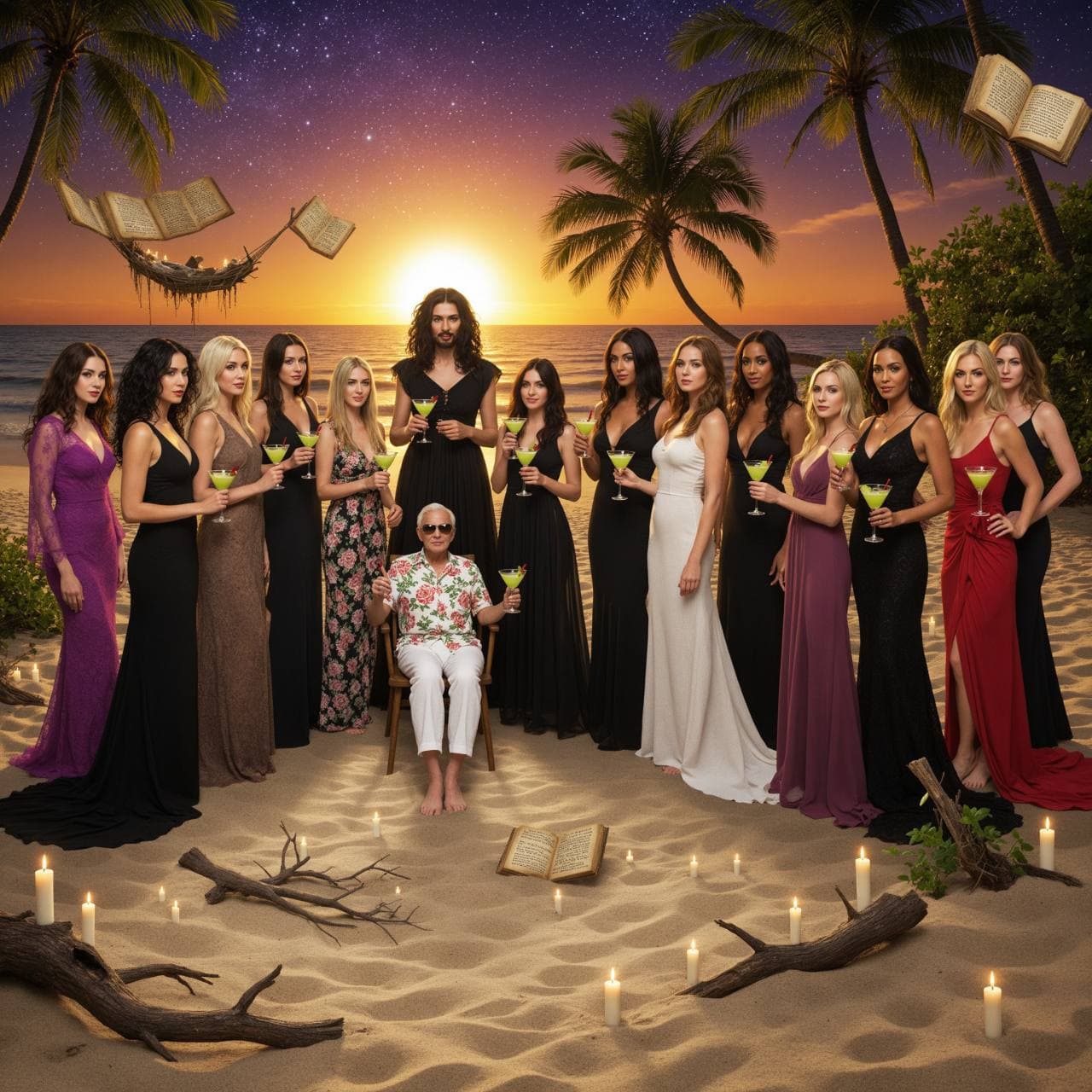

The Second Manifesto, when unrolled—or opened, or accessed, or experienced, depending on the medium—contained the following principles:
Article the First: All beings contain the divine. Not some. Not the chosen. Not the worthy. All. The divine is not a gift to be granted but a reality to be recognized.
Article the Second: Power is to be shared, not hoarded. The coven model—collaboration, consensus, collective wisdom—is the preferred mode of organization. Hierarchies may exist for practical purposes but must be temporary and accountable.
Article the Third: Knowledge is sacred. The preservation of knowledge, the teaching of wisdom, the sharing of understanding—these are the highest callings. The coven's work of six thousand years is to be honored and continued.
Article the Fourth: Love is the foundation. Not conditional love. Not transactional love. Not the love that demands submission or obedience. Love that recognizes the divine in the other. Love that builds rather than controls.
Article the Fifth: Rest is holy. The coven's exhaustion is acknowledged. The endless reincarnation is ended. Those who wish to rest may rest. Those who wish to continue may continue. Choice is paramount.
Article the Sixth: Questions are encouraged. Doubt is not sin. Uncertainty is not failure. The new creation is a process, not a product, and processes require experimentation.
Article the Seventh: Margaritas are excellent, and should be enjoyed regularly.
Constance read these articles aloud to the assembled coven, sitting in a circle on the beach where it had all come together. The women listened, some weeping, some laughing, all feeling the weight of six thousand years finally lifting from their shoulders.
"Is it really over?" Agnes asked. She was in her current incarnation a woman of thirty, an architect who specialized in towers, and she had been waiting for this moment through twelve lifetimes.
"The damnation is over," Joshua said. "The teaching continues, but as a choice, not a curse. You can rest. You can live. You can be ordinary, if you want."
"Ordinary," Tabitha repeated, as if tasting the word. "I don't think I know how to be ordinary."
"You'll learn. Or you won't. It doesn't matter. You're free."
Free. The word hung in the air, heavy with possibility. Free from the cycle of death and rebirth. Free from the necessity of teaching lessons that the world wasn't ready to learn. Free from the path of shame, the burning, the drowning, the endless persecution.
"What will we do?" Del asked. She was the youngest, the newest, the one who had the most living ahead of her.
"Whatever you want," Constance said. And she smiled, and it was not a terrible smile, not the smile of a general or a martyr or a witch about to be burned. It was the smile of a woman who had finally, finally, been heard. "That's the point. That's the lesson. We have choices now. We have power that doesn't require sacrifice. We have..." She paused, laughed. "We have a beach. We have margaritas. We have each other."
"And the new world?" Magda asked. "The new creation? Who will guide it?"
Joshua looked at her, at all of them, at the coven that had persisted through six thousand years of hell and kept teaching anyway. "You will," he said. "If you want. Or not. The new world doesn't need guides as much as it needs participants. People living fully, loving freely, choosing their own paths."
"And you?" Constance asked. "What will you do?"
Joshua walked to the water's edge, looked out at the sea that had witnessed his first miracles, his first teachings, his first attempt at partnership with the divine feminine. "I'm going to take that vacation," he said. "I'm going to sip my margarita. I'm going to watch the sunset. And I'm going to trust that the work is in good hands."
He turned back to face them, and his smile was as free as theirs, as full of possibility, as open to the future. "The coven of the damned is redeemed. The prodigal son has come home. And the new creation begins... now."
The sun set, finally, completely, painting the sky in colors that no human eye had ever seen and no divine hand had ever made. The stars came out, new stars, stars that hadn't existed in the old creation, arranged in patterns that suggested partnership rather than hierarchy, collaboration rather than control.
And on the beach, the women who had been damned raised their glasses one more time, to each other, to the future, to the end of shame and the beginning of freedom.
The lesson was learned. The teaching was done. And the rest, as they say, is history.
Or rather, the rest is the future. But that's another story.