


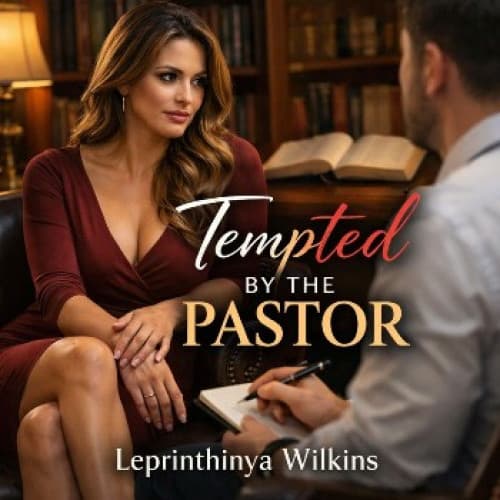

Church had never felt like a stage before.
That changed the moment my husband and I walked through the front doors hand in hand, smiling like we’d rehearsed it in the car.
His grip was loose. Performative. Mine was firm, almost defiant. If anyone was watching, I wanted them convinced.
The sanctuary buzzed with that low pre-service hum. Laughter. Whispered hellos. The shuffle of programs. The smell of perfume layered over coffee and stale hymnals.
I felt eyes on us immediately.
Not openly. That would’ve been rude. Church people have standards. Instead it was sideways glances. Lingering looks that slid away too quickly. Smiles that arrived half a second late.
My husband leaned in. “Why is everybody staring?”
“They always stare,” I said lightly. “You just don’t notice.”
But I noticed.
Because I knew exactly where his eyes were.
Caleb stood near the front, talking with an older couple, posture relaxed, hands folded easily in front of him. Pastor-perfect. Unbothered. Unremarkable.
Until his gaze lifted.
It landed on us.
On me.
Nothing in his expression changed. No reaction. No flicker. Just calm acknowledgment, like we were exactly what we appeared to be.
A married couple. Fine. Functional. Fixed.
The discipline of it unsettled me.
My husband squeezed my hand. “See? Church helps. You look happier.”
I swallowed. “I am.”
It wasn’t a lie. That was the part I hated most.
We slid into a pew halfway back. A woman in front of us leaned toward her neighbor, whispering something behind a cupped hand. The neighbor’s eyes flicked back at me, then forward again.
I adjusted my skirt. Sat taller.
The music started. People stood. Voices rose.
I sang automatically, words memorized from years of repetition, while my mind ran ahead of me, cataloging every glance, every pause, every time someone’s smile felt just a little too knowing.
During the sermon, Caleb spoke about unity. About commitment. About what love looks like when it’s nurtured instead of neglected.
My husband nodded along, murmuring agreement at the right moments.
I felt sick.
Caleb’s eyes swept the room occasionally, never lingering, never searching.
Except once.
Just once.
When he said, “Sometimes the strongest marriages are the ones that survive quiet seasons of doubt.”
His gaze found mine for half a second.
Then it moved on.
My heart didn’t.
After service, the lobby filled fast. Handshakes. Hugs. Conversations that sounded warm but stayed shallow.
“Good to see you both,” someone said to us. “You two look great.”
“Thank you,” my husband replied easily.
I smiled. Polite. Perfect.
A woman I barely knew leaned closer than necessary. “So glad you’re coming together. Pastor Caleb has such a gift, doesn’t he?”
I nodded. “He really does.”
Her smile lingered too long.
Across the room, Caleb spoke with another family, laughing quietly, perfectly at ease. If anyone was watching him, they saw exactly what they expected to see.
Which meant if anyone suspected something, they were watching me.
I felt it like static on my skin.
That afternoon, my phone buzzed.
I noticed you today, the message read. You handled yourself with grace.
No hearts. No exclamation points.
Still, my stomach flipped.
I didn’t respond.
I didn’t need to.