


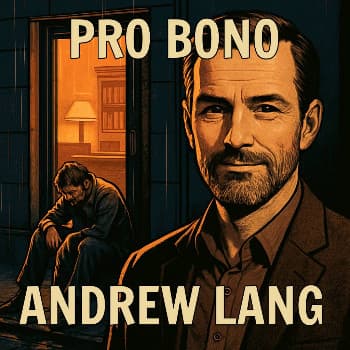
David rehearsed the words all the way to work.
He would keep it calm.
Professional.
Just a conversation between two men who worked side by side.
A question, that's all.
Not an accusation.
The morning air was crisp, the city a little too bright, a little too loud.
His footsteps felt heavier than usual, but he pressed on.
He wasn't stupid.
Todd had been acting differently for weeks — colder, tighter.
Who else could have sent that message?
By the time David stepped into the office building, he was ready.
He would confront Todd.
He would get the truth.
He would fix this.
He barely made it to his desk before his phone buzzed.
Come see me. -Martin
His boss.
David glanced toward Todd's cubicle.
Todd looked up briefly, then back down at his monitor, unreadable.
David squared his shoulders and headed for the corner office.
Martin didn't waste time.
"David, we have to let you go."
The words landed without ceremony, without buildup.
Like an execution.
David blinked. "What? Why?"
Martin sighed, leaning back in his chair like he was exhausted by the whole thing.
"Look, it's not personal. But the perception around here is that you haven't been pulling your weight. Todd's been carrying a lot of your tasks on top of his own. Management sees it. HR sees it. And honestly, in this climate..."
He spread his hands, helpless.
"...we can't afford dead weight."
David tried to fight back the surge of panic rising in his throat.
"I was staying late almost every night," he said. "I needed to delegate some things — that's normal. I—"
Martin cut him off with a small shake of his head.
"It's about appearances, David. And right now, you look like a liability."
There was no anger in his voice. Just the cold, bored finality of a man checking off another unpleasant task.
David stared at the desk for a long moment, the edges of the room blurring slightly, then nodded stiffly.
There was nothing left to say.
He packed up his things in silence.
The office around him moved on — phones ringing, keyboards clattering — as if he were already gone.
As he was zipping his bag shut, a courier approached, carrying a plain envelope.
"Delivery for David Travis?"
David took it automatically, barely registering the man’s face.
The envelope was unmarked.
No sender.
No return address.
Inside were photographs.
Photographs of him — smiling at the woman on the street he bumped into weeks ago, her hand on his shoulder, their bodies angled just enough to suggest intimacy.
Perfectly selected.
Perfectly damning.
A single slip of paper accompanied them:
Copies of these photographs have been sent to your wife.
David sat down heavily at his desk, the breath gone from his lungs.
He tried calling her — once, twice, three times — but each call rang out into the void.
Finally, a text came through:
"Please consult a lawyer.
We will handle communication through legal channels.
You should begin looking for new accommodation."
Short.
Cold.
Final.
He stumbled out of the building, the city yawning open around him.
The sky had clouded over — a hard, flat gray pressing down on the streets. People rushed past, anonymous and uncaring.
He found himself outside Mathers’s office without even realizing how he'd gotten there.
The lights were on.
The door was open.
Normal.
Professional.
Untouched.
Mathers smiled when he saw him — but the warmth was gone.
"David," he said, stepping aside. "Come in."
David all but fell into the chair, bag slipping from his hands.
"I need your help," he said, voice cracked and raw. "Please, Mathers. Everything's falling apart. I don't know what to do."
Mathers sat down across from him, folding his hands neatly.
"I'm sorry, David," he said, voice smooth, regretful. "My pro bono period has ended."
David blinked.
"What?"
"My standard rate is five hundred pounds an hour now," Mathers said calmly. "I understand if that's not feasible for you at the moment. No hard feelings."
David stared at him, the words sinking in like stones.
"You know I can't afford that," he said. "I just lost my job — you know—"
Mathers nodded sympathetically.
"I'm sorry, but I run a business, David. I have to be fair to all my clients."
There was no malice in his voice.
No anger.
Just quiet, professional finality.
David stood up slowly, feeling the blood drain from his face.
He staggered toward the door, fumbling with the handle.
As he pulled it open, he caught a glimpse of the waiting room.
A young man sat there — maybe mid-twenties, nervous, hopeful, clutching a thin folder in his hands.
Waiting for his turn.
David stepped outside into the cold.
The city moved on without him, indifferent and unhurried.
He turned his collar up against the wind and walked into the empty night.