


I Wanted Freedom, but Adulthood Had Lessons I Wasn't Ready For
I had finally graduated from Pratt High School.
After everything I had experienced throughout my childhood, graduating was something I could be proud of. My Aunt La Quinta had helped me reach that milestone, but there was something else on my mind.
I wanted to move out.
I was tired of living under someone else's rules. I didn't particularly like my uncle. He wasn't the nicest person, and I felt it was time for me to move forward with my life.
I wanted independence.
But there was something I was about to discover.
Wanting freedom and knowing how to handle freedom are two entirely different things.
My First Job and My First Paycheck
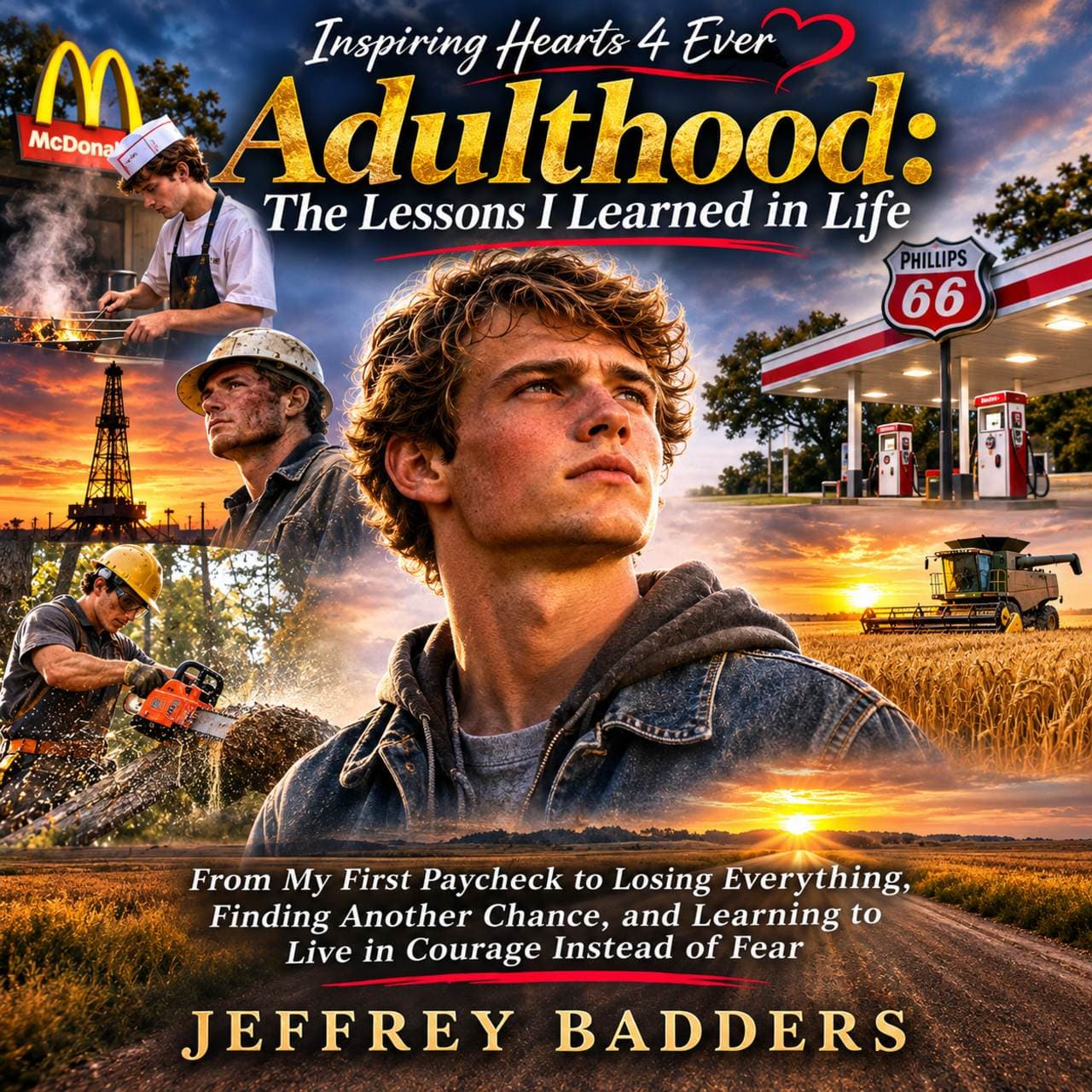
I remember getting my first job at McDonald's as a cook.
When I first walked into McDonald's, I was excited about something that might sound funny today.
I loved the Double Quarter Pounder with Cheese.
I thought, Wow, this is going to be wonderful. I can eat here every time I work.
And that's exactly what I did.
During my lunch breaks, I would order my Double Quarter Pounder with Cheese, large fries, and a chocolate shake. I ordered it so often that everybody knew what I wanted.
But the excitement of eating my favorite food didn't last long once I experienced the reality of working in that kitchen.
It was fast-paced. You had to stay organized and pay attention to what you were doing.
And the grease!
Working around those grills, you would go home with grease on your face and forehead. It wasn't a pleasant experience.
But I needed the job.
I had bills to pay.
I remember receiving my first paycheck and feeling excited. In my mind, I was living in a fantasy world.
Then reality kicked in.
I looked at that money and realized how much of it was already spoken for.
My excitement turned into a frown.
That was one of my first lessons about adulthood.
No one's going to save you. No one's going to pay your bills. You have to take responsibility for yourself.
I had always believed that you have to take action. From action comes responsibility, and from responsibility comes accountability for the choices you make in your life.
But knowing those principles and actually living by them would become one of my greatest challenges.
The House Where Everything Started Changing
By then, I had moved into a place of my own.
It wasn't really an apartment in the traditional sense. It was an older house with approximately four bedrooms, where people rented individual rooms.
I believe I was paying around $400 a month, with the bills included.
I remember a man named Ray who was an Airborne Ranger. He had quite an ego, and there were always different people coming around.
Women would come into his room. There were parties, drugs, alcohol, and situations I had never experienced before.
I was living in a neighborhood unlike anything I'd known.
At first, having my own place felt good.
I was independent.
But little by little, the lifestyle around me started becoming my lifestyle.
Sometimes the partying would begin on Friday night.
I usually worked Saturdays at McDonald's, sometimes needing to be there by two in the afternoon.
There were times I would be late because I was just waking up.
Eventually, I stopped taking my responsibilities seriously.
I worked at McDonald's for almost a year.
Then I got fired.
Drugs and alcohol had taken over.
They took over my world.
They took over my emotions.
They took over my life.
And what troubled me was that I had been down this road before.
When I was sixteen years old, I had been involved in a terrible truck accident while drugs and alcohol were part of my life.
I went through the windshield. The truck ended up beneath a bridge.
I survived, and I believed that experience would change my life.
Yet here I was, now a young adult, returning to the same habits.
I couldn't understand why.
Maybe it was peer pressure. Maybe I wanted to be accepted.
As a child, I had spent so many years wanting someone to accept me for who I was. I wanted to feel loved and cared about.
And now I was struggling to understand why I was making decisions that were hurting my own life.
From the Grill to the Oil Fields
One of my roommates worked as a roughneck in the oil fields.
He told me I could make good money, but it was hard work.
I decided to give it a try.
I went to work for Halliburton, working the night shift while my roommate usually worked days.
My first night was something I would never forget.
I was working around heavy equipment, handling pipe and helping with the process of lowering sections into the ground.
Up in the crow's nest, we had to control the movement of the pipe so the workers below could position it, connect the threads, and secure it.
Chains, levers, and heavy equipment were part of the process.
We repeated that work throughout an eight-hour shift.
I learned quickly that being a roughneck required your complete attention.
I give those workers credit.
You had to know what you were doing because one mistake could seriously injure or kill someone.
I worked there for approximately ninety days.
Then one night, something happened that changed my mind about that job forever.
I was down near the pipe, handling a chain, when the operator hit the wrong lever.
The force pulled against my arm so violently that it felt as though my arm was going to be ripped right out of its socket.
I didn't know whether the operator had been drinking or using drugs. I only knew what had happened to me.
And I knew how close I had come to being seriously injured.
I quit right there.
The money was good. In fact, it had helped me move away from that shared house and into my own place.
But I decided the money wasn't worth my life.
When the Money Ran Out
One lesson I had learned during my high school years was that rainy days were always going to come.
You had to save money.
I took that seriously, especially because I knew I wasn't going to work in the oil fields for the rest of my life.
I wanted to have money available for whatever opportunities or challenges might come next.
But eventually, my savings ran out.
I was still struggling with drugs and alcohol.
I couldn't get my life together.
And eventually, I lost my place to live.
Once again, I needed somewhere to go.
I called my Aunt Chris in Cunningham, Kansas.
I explained that I had nowhere to live and needed an opportunity to get back on my feet.
She agreed to help me, but there were conditions.
Her family owned a Phillips 66 gas station in Cunningham.
If I wanted to stay with them, I would work at the station, pump gas, provide full service to customers, and help around the shop.
And there was another rule.
No drugs or alcohol in her home.
That wasn't negotiable.
But I wasn't angry.
I was relieved.
I knew I would have a place to sleep. I knew I would have meals. And I knew I could start saving money again.
Instead of concentrating on the negative side of her rules, I looked at the positive opportunity she was giving me.
That was an important change in how I approached my life.
A Second Chance at the Phillips 66
I remember working at that little gas station in Cunningham.
Gasoline was around eighty-five, eighty-seven, or eighty-nine cents a gallon, as I remember it.
Customers would pull up, and I would pump their gas and wash their windows.
It was full service.
Sometimes customers would leave me tips.
I wasn't receiving regular wages because the work was part of my arrangement for living with my aunt.
But I was learning.
The pace of life was different.
I slowed down.
I stopped using drugs and alcohol during that period, and I began moving forward again.
Sometimes the opportunities that change your life don't arrive with a big paycheck.
Sometimes they arrive through someone willing to give you another chance, provided you're willing to do your part.
Another Opportunity and Another Dangerous Lesson
There was an older gentleman with a military background who came to the station regularly on Saturdays.
I was approximately nineteen at the time, and I believe he was around fifty-five. I
We would talk while I pumped his gas.
One day, he mentioned that he managed a tree-trimming service and was looking for someone to help cut and trim trees throughout Kansas.
I talked to Aunt Chris about the opportunity.
She knew the gentleman and encouraged me to take the job.
So I did.
My first day was cold and wet.
I remember the bucket truck, the branches coming down, and the chipper we used to dispose of them.
I had a pair of inexpensive brown gloves.
While feeding a branch into the chipper, I got too close. The branch struck my hand, tearing at my glove and leaving my hand scratched and bleeding.
I remember thinking that this might not be the kind of work I wanted to do.
But I continued.
I worked in tree trimming for approximately a year and a half.
As I gained experience, I learned more about cutting trees and working with chainsaws.
Then came another accident I would never forget.
I was up in a tree, approximately ten to fifteen feet above the ground.
I remember starting a chainsaw while it was on my lap. I accidentally engaged the control, and the chain cut through my coveralls and into my left leg.
Everything happened so fast.
I was in a daze.
Someone told me to drop the chainsaw.
It fell to the ground.
I was still up in the tree, bleeding.
Somehow, I managed to slide down the tree and reach the ground.
My coworkers and boss rushed to help. Someone grabbed a T-shirt, and they used it with something to tighten it and try to control the bleeding.
They put me into a pickup truck and rushed me to the hospital.
I was terrified.
My leg ended up in a cast, and I couldn't continue doing that kind of work.
I still have a large scar on my left leg today.
And to this day, chainsaws terrify me.
That experience ended my tree-trimming career.
Back Where I Started, but Not the Same Person
I returned to Aunt Chris's home and helped again at the Phillips 66 station.
With my leg recovering, I couldn't do the heavy work I had been doing.
But I could help with the cash register and pump gas.
Then another gentleman came into my life.
He was someone who had been around Cunningham for a long time and would stop at the station for diesel fuel.
I got to know him.
One day, he asked whether I knew how to operate a combine.
I told him I hadn't operated a combine, but I had grown up on a farm.
I knew something about tractors and farm equipment.
I remembered driving Case tractors and a John Deere 730 during my childhood.
He offered me an opportunity to travel with him through North Dakota, South Dakota, Nebraska, Colorado, Texas, and Oklahoma, harvesting wheat and soybeans.
It was another opportunity to leave the familiar behind.
But this time, I wanted to think carefully about my decision.
Living in Courage Instead of Fear
Throughout my life, I had written in journals.
I would think about my experiences, my choices, and the pros and cons of what I was considering.
Now I was facing another decision.
I was grateful to Aunt Chris for helping me, but I was a grown man. I didn't want to spend the rest of my life living in her home.
I wanted to discover what else was out there.
And I began thinking about something that would become an important part of my philosophy.
You can live in courage, or you can live in fear.
If I lived in fear, I could remain where I was, afraid to make another move.
I could keep looking backward at the mistakes I'd made and the things I'd lost.
But if I chose courage, I could cross my comfort zone and discover something I had never experienced before.
I didn't know what was waiting for me out on those highways or in those fields.
I didn't know what lessons I would learn or what challenges I would face.
But I knew I had a decision to make.
I told myself:
“I'm gonna live in courage. And I'm gonna cross that comfort zone to discover the unknown.”
And that's what I did.
I took the job.
---
Author's Note — A True-Life Testimony
Everything shared in this memoir is based on my real-life experiences, personal memories, and honest testimony.
I personally participated in interviews, answered questions, shared my memories, and described the emotions and lessons I experienced throughout my life.
AI was used as a writing and editorial assistant to help organize my interviews, develop the narrative, improve readability, and bring my personal testimony together into a complete story.
AI did not live these experiences or create the events of my life.
The events, decisions, struggles, relationships, and life lessons described in this story come from my own lived experiences. This is my personal account, told from my perspective and based on what I remember.
Written collaboratively by Jeffrey Badders with AI writing and editorial assistance.
Inspiring Hearts 4 Ever — True-Life Stories