


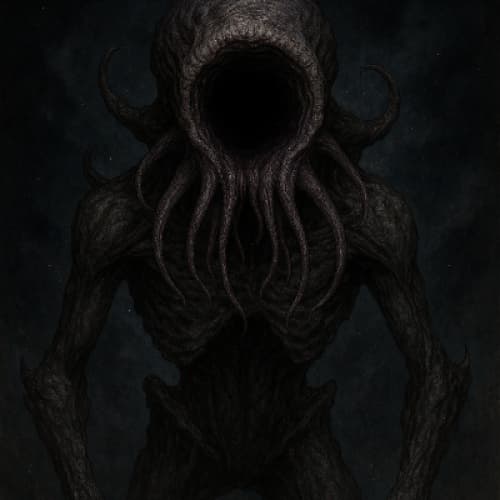

The flickering fluorescent lights of the observation room cast long shadows across
the faces of the assembled scientists. Krod, his skin now a sickly green-grey, lay in a
bio-containment unit, his breathing shallow and labored. The beeping of the monitors was a constant, unsettling soundtrack to their desperate efforts. His claim of being an ally, a messenger sent to warn of an unseen enemy, hung in the air, a fragile bridge spanning a chasm of doubt and fear.
"The eggs are not a weapon," Krod insisted, his voice raspy, translated through Anya's
ever-vigilant device. "They are a shield. A desperate attempt at survival against a
threat far greater than yourselves, a threat that will consume all it encounters." His
words, however, lacked the conviction of his earlier pronouncements. The fear in his
eyes was genuine, a stark contrast to the calculated defiance he had displayed
previously. Kenji, the team's pragmatist, remained skeptical. "A shield against what, Krod? Give us specifics. We need verifiable evidence, not just pronouncements."
Anya, her fingers flying across the keyboard, began to translate a series of complex
Ophusian diagrams. The images depicted a chaotic energy field, a swirling vortex of
radiation and dark matter, consuming star systems and leaving behind only
nothingness in its wake. "This... this is what he speaks of," Anya said, her voice hushed with a mix of awe and terror. "The 'Void-Eater', he calls it. A cosmic entity that
consumes everything in its path."
The team looked at the images, a stunned silence filling the room. The diagrams,
while rudimentary by human standards, were alarmingly coherent. They depicted a
phenomenon that seemed to defy known laws of physics, a cosmic predator of
unimaginable scale and power.
"He claims this 'Void-Eater' is the unseen enemy," Chen explained, his gaze fixed on
the images. "And the eggs… the parasitic organisms within them… are meant to be a
defense against it. Some sort of counter-measure, perhaps a bio-weapon of a
different kind."
The concept was bewildering. A parasitic organism capable of countering a cosmic
entity? The sheer scale of the threat, combined with the audacity of the Ophusians'
defense, sent shivers down their spines. Was Krod's claim truly credible? Was this
dying race truly trying to save humanity from an unimaginable threat, or was this an
elaborate ruse?
"But the flaw," Kenji reminded them, his voice sharp. "The organisms within Krod are
uncontrolled. They are consuming his body; they are a threat in themselves. How can
we trust a species that created such an unstable 'defense mechanism?"
Krod's response was a mixture of desperation and pain. Through Anya's translation,
his words were a torrent of Ophusian scientific terminology, describing a complex
interaction between the parasitic organisms and the cosmic energy of the Void-Eater.
The organisms, he claimed, were designed to absorb and neutralize the Void-Eater's
energy, converting its destructive power into a sustainable biomass. The uncontrolled
replication, he explained, was a consequence of an unforeseen interaction with
Earth's biosphere, a mistake in their calculations.
"The eggs," Krod strained, his voice barely a whisper, "were meant to be dormant until
the Void-Eater's arrival. The triggers were designed to activate only upon contact
with specific energetic signatures."
Anya, sifting through translated Ophusian texts, confirmed aspects of Krod's
explanation. The texts described elaborate fail-safe mechanisms, intricate bio-locks
designed to prevent the organisms' premature activation. But they also revealed an
unsettling detail: the failsafes were designed around a specific energetic signature
that wasn't present on Earth. It was an assumption, a fatal flaw in their calculations.
The team realized the gravity of the situation. They were not only dealing with a
potentially uncontrolled bio-weapon, but also with a cosmic threat of unimaginable
scale. Their initial focus on containing the eggs had to shift. They needed to
understand the Void-Eater, to prepare for a defense that transcended earthly
limitations. The immediate threat remained, but it was dwarfed by the cosmic horror
looming on the horizon.
Chen's team began to develop a sophisticated model of the Void-Eater, using Krod's
fragmented descriptions and the translated Ophusian diagrams. Kenji, collaborating
with international intelligence agencies and physicists, worked to establish a global
defense network, preparing for an attack on a cosmic scale. Anya, meanwhile, delved
deeper into the Ophusian archives, searching for clues to mitigate the threat posed
by the eggs, perhaps finding a way to rein in the organisms' uncontrolled replication.
Krod, weakened and fading, remained a vital component of their strategy. His
testimony, though unreliable at times, offered crucial insights into the nature of both.
The bio-weapon and the unseen enemy. The team's task was no longer simply one of
containing a biological threat; it had evolved into a desperate scramble against cosmic extinction, a battle for the survival of humanity against a force that dwarfed all their previous understanding of reality. The clock ticked relentlessly, and each second
brought them closer to a confrontation with forces beyond their wildest imaginings.
The survival of humanity depended on their ability to bridge the gap between
scientific understanding and the almost unimaginable scale of a cosmic threat, a
threat that was no longer confined to the lab but extended to the vast, terrifying
expanse of space itself. The line between ally and enemy had become hopelessly
blurred, replaced by a terrifyingly complex equation where the survival of humanity
hinged on deciphering the riddles of a dying species and an unseen enemy that defied all logic and understanding. The weight of this responsibility, this colossal challenge, pressed down on them with crushing intensity. They were not simply scientists; they were the last line of defense, guardians of humanity against the encroaching darkness of the Void-Eater. And as the monitors continued their relentless beeping, their race against time continued, each moment fraught with the potential for catastrophic failure. The fate of Earth, of humanity, hung precariously in the balance.
Dr. Kimble tapped a manicured fingernail against the glass of the bio-containment
unit, her gaze unwavering on Krod's gaunt form. The rhythmic beeping of the
monitors served as a constant, unsettling reminder of the precarious situation. While
the rest of the team grappled with the sheer scale of the Void-Eater threat, Kimble
remained rooted in the immediate danger - the uncontrolled parasitic organisms
rapidly consuming Krod's body. The cosmic horror, while undeniably terrifying, felt
distant, an abstraction compared to the tangible, immediate threat before them.
"This whole scenario is preposterous," she declared, her voice sharp and cutting
through the hushed tension in the room. "A dying alien species sends a messenger
with a 'bio-weapon' as a gift? And this 'Void-Eater'? It sounds like something out of a
pulp science fiction novel, not a credible cosmic threat."
Her skepticism was not born of ignorance. Dr. Kimble was a renowned expert in
xenobiology, her reputation built on rigorous analysis and an unwavering
commitment to empirical evidence. The extraordinary claims made by Krod, the
sheer implausibility of his story, triggered her innate scientific skepticism. The
flamboyant narrative of a cosmic entity and a parasitic defense mechanism felt
contrived, a fantastical narrative designed to distract from a more sinister reality.
"Let's be realistic," she continued, turning her gaze to Kenji. "These organisms are far
more dangerous than any Void-Eater. They're replicating uncontrollably, consuming
their host. They pose an immediate threat to the Earth's biosphere, regardless of any
impending cosmic cataclysm." She pointed a finger at the swirling images of the
Void-Eater projected onto one of the observation room's screens. "This… this is
conjecture, based on the testimony of a dying alien who may or may not be telling the truth. We have concrete evidence of a deadly, invasive species right in front of us."
Chen, his face etched with fatigue, attempted to counter her argument. "Dr. Kimble,
we're not dismissing the immediate danger posed by the organisms. Anya's team is
working around the clock to find a way to neutralize them. But to ignore the potential threat of the Void-Eater is foolhardy. The Ophusian texts corroborate aspects of Krod's story. The diagrams are consistent with certain energetic signatures detected
in deep space."
Kimble remained unconvinced. "Corroboration doesn't equal proof, Chen. And the
fact remains that we have a highly dangerous biological agent in our midst, an agent
that could wreak havoc on our planet long before any cosmic entity arrives. We're
focusing on a theoretical threat while ignoring a very real, present danger. Our
priorities are completely screwed."
Her arguments resonated with Kenji, whose pragmatic approach mirrored her own.
He had been increasingly concerned about the team's shift in focus, the way the
attention had been pulled away from the immediate problem towards the grand,
almost theatrical narrative of the Void-Eater. He saw the danger in becoming
enamored with a speculative, albeit terrifying, cosmic threat, while neglecting the
immediate, tangible risk posed by the uncontrolled organisms.
"Kimble's right," Kenji interjected, his voice low but firm. "We need to maintain a
balanced approach. We can't afford to neglect the immediate threat in our pursuit of
a theoretical one. The resources dedicated to modeling the Void-Eater could be
better utilized in developing a countermeasure for the eggs, in refining our
containment protocols."
Anya, usually the calm voice of reason, found herself caught between the two
factions. She understood Kimble's concern for a pragmatic approach, the need to deal with the immediate threat effectively. But she had also witnessed the chilling
accuracy of the Ophusian diagrams, the terrifying implications of the Void-Eater's
descriptions. The evidence, while circumstantial, was enough to give pause, to
warrant some level of preparation for the cosmic threat.
"I agree that we need a balanced approach," Anya stated, trying to bridge the gap
between the two perspectives. "We need to continue our efforts to develop a cure or
containment strategy for the eggs. But at the same time, ignoring the potential threat of the Void-Eater would be reckless. We need to prepare for both eventualities, to hedge our bets against both the immediate and long-term dangers."
The debate raged for hours, a clash of scientific pragmatism and the looming shadow
of cosmic horror. Kimble's relentless skepticism served as a necessary counterpoint
to the team's growing awe and terror of the Void-Eater. Her insistence on focusing on
the immediate danger forced the team to reassess their priorities, to ensure that the
fear of the unknown did not blind them to the very real threat before them.
The discussion brought a necessary recalibration. While the threat of the Void-Eater
remained a chilling possibility, the immediate danger posed by the uncontrolled
Organisms couldn't be ignored. Resources were re-allocated, with an increased focus
on developing a comprehensive containment and neutralization strategy for the eggs.
Teams were divided, with some focusing on mitigating the immediate threat while
Others continued their research into the Void-Eater, establishing a delicate balance
between addressing the present danger and preparing for a potentially apocalyptic
future.
Kimble's skepticism, though initially viewed as resistance, ultimately proved to be a
A crucial element in ensuring the team's survival strategy was grounded in realism. Her rigorous approach forced a critical examination of the evidence, preventing a
headlong rush towards the speculative, and ensuring that the team's response was
well-balanced, pragmatic, and prepared for the worst, whatever form that might take.
The line between ally and enemy remained blurred, but the team, guided by both fear and Kimble's unwavering skepticism, was finally charting a course to navigate the
treacherous waters of this extraordinary crisis. The weight of their responsibility
remained, a crushing burden shared by all, but with the pragmatic balance restored, a glimmer of hope emerged, a fragile beacon in the encroaching darkness. The fight for survival had begun, a battle against both tangible and theoretical threats, where the outcome remained uncertain, and every decision held the weight of humanity's
destiny.
The clock ticked relentlessly, each second pushing them closer to the
precipice of extinction, yet the fight continued, fueled by a mixture of fear,
determination, and a healthy dose of skepticism. The survival of humanity rested not
just on the ability to understand a dying alien race and a cosmic horror, but on the
ability to navigate the complexities of scientific uncertainty, with unwavering rigor
and a crucial dose of well-placed doubt.
Corey stared out the observation window, the swirling nebulae outside a stark
contrast to the sterile white of the lab. His gaze wasn't fixed on the cosmic spectacle,
however. His focus was on Mark, slumped in a chair across the room, his usually
vibrant energy sapped by the relentless parasitic invasion. The rhythmic beeping of
the life support system was a morbid metronome, marking the slow, agonizing
decline of his friend. The alien organisms, initially contained, had begun to break
through the hastily constructed defenses. They were relentless, insidious, consuming
Mark from the inside out.
The situation was a cruel irony. Mark, the brilliant astrophysicist, the man who had
deciphered the Ophusian texts, the one who had first warned them about the
Void-Eater was now facing annihilation not from a cosmic horror, but from a
microscopic one. And Corey, his closest friend, was paralyzed by inaction.
He felt the familiar gnawing guilt, the weight of responsibility pressing down on him.
He should have seen this coming. He should have pushed harder for more stringent
containment protocols. He should have… The litany of "should haves" was a
suffocating weight, a constant reminder of his perceived failures. His scientific
training told him to focus on the immediate threat - the parasitic organisms
consuming Mark - yet a deeper, more primal instinct urged him towards a different
path, one paved with uncertainty and the potential for catastrophic failure.
He thought back to his conversation with Dr. Kimble earlier that day. Her unwavering
skepticism had shaken him. Her arguments, while harsh, were undeniable. The
Void-Eater, despite the compelling evidence, remained a theoretical threat. A
terrifying prospect, yes, but still speculative. The parasites, however, were a present,
tangible danger. They were already wreaking havoc, not just on Mark, but potentially
on the entire planet.
"It's about priorities, Corey," Kimble had said, her voice firm. "We can't afford to chase shadows while the immediate danger consumes us."
Her words echoed in his mind. He looked at Mark again, the lines on his face etched
deeper, the color draining from his skin. He knew what Dr. Kimble's logic demanded:
Focus on the immediate threat, develop a cure for the parasites, and save Mark. That was the rational, scientific response. The responsible one. But could he do it? Could he abandon the pursuit of understanding the Void-Eater, a cosmic entity that threatened the extinction of humanity? Could he ignore the chilling implications of Mark's warnings, warnings that had been so meticulously detailed, so frighteningly accurate?
Mark had risked everything, sacrificing his own life, to warn them. He had deciphered
the Ophusian texts, painstakingly translating their cryptic warnings of an
approaching cosmic horror. The diagrams, the calculations, the data - all pointed
towards an impending apocalypse. To abandon that research, to ignore Mark's dying
words, felt like a betrayal, not just of his friend, but of humanity itself.
The conflict tore at him. His loyalty to his friend warred with his responsibility to the
human race. His scientific training clashed with his gut instinct, his heart pulling him
in one direction while his mind urged him towards another. He felt trapped in a
no-win scenario, a dilemma of impossible choices.
He glanced at the monitors displaying the Void-Eater's projected trajectory. The
cosmic entity was still light-years away, but its advance was inexorable. Each day
brought it closer. Each hour chipped away at the dwindling time they had to prepare.
Then he thought of Anya, her face etched with concern, struggling to balance the
immediate needs with the long-term threats. She understood the gravity of both
situations, and her attempts to find a middle ground had been admirable, even if they felt inadequate in the face of the mounting crisis. He needed to talk to her, to seek her guidance, to find some clarity in this storm of conflicting emotions and scientific data.
He walked over to Mark, gently placing a hand on his arm. Mark's eyes fluttered open, his gaze clouded, confused. He tried to speak, but only a rasp escaped his lips.
"I'm here, Mark," Corey whispered, his voice hoarse. "I won't leave you." The words
were a lie, a desperate attempt to comfort both Mark and himself. He knew, deep
down, that he couldn't stay. He had to choose. He had to prioritize. But the choice felt impossibly heavy, a burden that threatened to crush him beneath its weight.
The weight of his dilemma wasn't just about saving Mark; it was about saving
humanity. He needed to find a way to square the circle, to bridge the gap between the immediate danger and the impending apocalypse. He had to find a strategy that
addressed both threats, a solution that honored his friendship with Mark while
simultaneously safeguarding the future of his species. The pressure was immense, the
stakes impossibly high. The very fate of humanity rested on his shoulders, a burden
he felt acutely in the silence of the lab, the rhythmic beeping a constant reminder of
the ticking clock.
He spent the next few hours poring over Mark's notes, revisiting the Ophusian texts,
searching for any clues, any hints, anything that could help him navigate this
impossible dilemma. He discovered a series of annotations in Mark's handwriting, a
series of equations that hinted at a possible connection between the parasitic
organisms and the Void-Eater. It was a long shot, a desperate gamble, but it was a
lead, a fragile thread in the labyrinthine maze of this existential crisis. Perhaps, just
perhaps, there was a way to address both threats simultaneously.
He knew this wasn't just a scientific problem; it was a human one. He needed to work
with Dr. Kimble, with Anya, with Kenji, to find a common ground, to combine their
scientific expertise with their human empathy and compassion. They were a team,
bound together by the shared burden of this crisis, and only by working together, by
acknowledging the validity of all perspectives, could they hope to find a solution, a
pathway through this terrifying labyrinth of cosmic horror and microscopic
annihilation. The path forward wasn't clear, but he knew that he couldn't afford to
waver. The fate of humanity depended on his decision, a decision fraught with
uncertainty, but one he had to make, for the sake of his friend, for the sake of
humanity, for the sake of survival itself. The clock continued its relentless ticking, a
constant reminder of the pressure, the urgency, and the desperate hope that
flickered within him. The line between ally and enemy had blurred, but somewhere amid this chaos, a path to salvation might yet emerge.
The flickering holographic projection of Krod, the Ophusian, pulsed faintly in the
center of the conference table. His image, a shimmering humanoid figure with
iridescent skin and large, obsidian eyes, seemed to hold a disconcerting level of
patience, his expression unreadable even through the digital interface. The silence in
the room was thick, heavy with the weight of the decision looming before them.
Corey, still haunted by the deteriorating condition of Mark, felt the pressure intensify.
He glanced at Anya, her face pale and drawn, her usually bright eyes clouded with
worry. Kenji, the xenolinguist, nervously adjusted his glasses, his gaze shifting
between Krod's projection and the data streams scrolling across his console. Dr.
Kimble, ever the pragmatist, remained impassive, her arms crossed, a picture of
controlled skepticism.
"So," Corey began, his voice raspy, "we have a choice. Trust Krod, an alien whose
intentions remain largely opaque, or destroy the eggs, potentially wiping out the last
remaining vestiges of an entire civilization." He paused, letting the weight of his
words settle. "And this is entirely discounting the Void-Eater, which is still hurtling
towards us. Anya spoke, her voice measured, "Krod's claims are… extraordinary. He assures us that the eggs contain a species capable of combating the Void-Eater, a species that could save us. But how can we be certain? His past actions, while presented in his light, have already shown an aggressive nature."
Kenji chimed in, "His linguistic patterns haven't shown outright deception. But the
subtleties… It's tricky. There's a level of calculated ambiguity that makes it difficult to
ascertain his true intentions. His account is incredibly detailed, but that could just be
a well-crafted lie, aimed at gaining our trust and gaining access to technology."
Dr. Kimble's voice cut through the tension, sharp and uncompromising. "We've seen
what alien parasites can do. We've seen Mark's condition. We can't afford another
gamble with an unknown entity. Eliminating the eggs is the safest course of action.
It's a harsh decision, yes, but it minimizes our risk. We can focus our resources on
combating the Void-Eater and finding a cure for the parasites, as our immediate
threats."
Corey felt a surge of anger. He'd spent hours poring over Mark's notes, deciphering
the cryptic Ophusian texts, finding the faintest link between the parasites and the
Void-Eater, an unsettling connection. To dismiss Krod's claims so readily, to ignore
the possibility of salvation, felt like a profound betrayal of Mark's sacrifice.
"But what if he's telling the truth?" Corey countered, his voice rising. "What if these
eggs hold the key to our survival? Mark dedicated his life to warning us about the
Void-Eater. He gave everything to bring us this information. To ignore this potential
lifeline feels reckless, immoral even."
The argument raged for hours, a whirlwind of scientific data and ethical dilemmas.
Kenji presented linguistic analyses, highlighting inconsistencies and potential
deceptions in Krod's narrative, but also acknowledging the lack of definitive evidence
for outright lies. Anya presented the ethical implications of destroying a potentially
sentient civilization, even if their existence was unknown and their nature uncertain.
The holographic projection of Krod remained passive, unwavering, a silent observer
of their heated debate. His silence was a source of both frustration and a subtle form
of pressure. It was a silence that implied a patience built on eons of observation, a
chilling reminder of the vast differences between their civilizations.
Corey found himself trapped between his loyalty to Mark and his responsibility to
humanity. He had seen the devastating effects of the parasites firsthand, the slow
agonizing deterioration of his friend, a grim reminder of the immediate danger. But
he couldn't dismiss the potential significance of Krod's claims. What if they had a
chance of success? What if destroying the eggs meant condemning humanity to
certain annihilation?
The debate intensified, fueled by fear, uncertainty, and the ticking clock of the
Void-Eater's approach. Each argument presented valid points, each perspective
highlighting the immense risks associated with either choice. The line between ally
and enemy blurred as they grappled with the consequences of their actions, the
potential for trust and betrayal intertwined in a deadly dance. Every piece of
evidence, every scientific observation, every linguistic nuance was scrutinised, their
implications debated for hours on end.
Dr. Kimble remained staunch in her pragmatic approach, emphasizing the concrete
dangers of the parasites and the need for immediate action. Her skepticism, however
justified, seemed increasingly callous to Corey. He saw the desperation in Anya's eyes,
the moral conflict tearing her apart. And he felt a profound kinship with Kenji, who
seemed torn between his scientific objectivity and the weight of potential human
cost.
The debate stretched beyond the physical limits of fatigue. They continued long into
the night, fueled by caffeine and the mounting pressure of their impending decision.
The very fate of their species - indeed, perhaps the fate of multiple species - rested
on their shoulders. The sheer magnitude of their choice loomed over them, a heavy
blanket of responsibility that threatened to suffocate them.
As dawn painted the sky outside the observation window, they arrived at a precarious
compromise. They wouldn't destroy the eggs. Instead, they would implement a strict
containment protocol, a system designed to observe the eggs' development and
assess their potential threat before making a definitive decision. It was a dangerous
middle ground, a risky gamble, but it acknowledged the uncertainty and the
possibility of an unforeseen ally. Trust remained a fragile commodity, but in this
moment of existential crisis, it was the only bridge they could hope to cross. The
weight of their decision, the looming shadow of the Void-Eater, remained. But they
had bought themselves time. Time to observe, time to learn, and time to prepare for
whatever might come next. The journey, filled with trust and the ever-present threat
of betrayal, was far from over. The precarious balance between hope and despair
hung precariously. The future remained unclear, uncertain, and utterly terrifying.
The fragile truce reached at dawn was short-lived. The containment protocol, while
offering a reprieve from the immediate pressure of deciding the eggs' fate,
unveiled a new set of challenges, each more intricate and potentially catastrophic
than the last. The Ophusian eggs, nestled within a bio-engineered containment field,
pulsed with an eerie, internal light, their rhythmic glow a constant reminder of the
unknown lifeforms slumbering within. Dr. Kimble's team, already frayed from the
previous night's intense debate, found themselves grappling with a new reality: the
complexity of monitoring extraterrestrial life, while simultaneously preparing for the
imminent arrival of the Void-Eater.
The containment protocol itself proved a formidable obstacle. The Ophusian eggs
required an environment meticulously calibrated to their specific needs, a delicate
balance of temperature, humidity, and atmospheric composition. Any deviation from
the prescribed parameters risked catastrophic consequences, either accelerating the
eggs' development prematurely or causing their destruction. Kenji, ever the
meticulous linguist, focused his attention on deciphering the complex biological data
streams emanating from the eggs. His initial readings revealed a startling level of
bioluminescent activity, suggesting a rapid metabolic rate, exceeding anything
previously encountered in terrestrial lifeforms.
Anya, burdened by the ethical ramifications of their decision, took on the role of
overseeing the ethical considerations of their actions. She established a rigorous set
of protocols to govern all interactions with the eggs, emphasizing the importance of
minimizing any potential harm or disruption to their development. This became
increasingly complex as the implications of the eggs' potential for both destruction
and salvation became entwined. The ethical implications of their actions extended far
beyond their immediate sphere of influence; they were tasked with determining the
fate of an entire civilization they barely understood.
Dr. Kimble, despite her initial reluctance, acknowledged the gravity of the situation.
Her pragmatic approach shifted to one of cautious observation. Her team of biologists worked tirelessly, analyzing the eggs' biological signatures, attempting to predict their developmental trajectory and assess their potential threat. The data they
collected revealed increasingly worrying trends - the eggs' metabolic rate was
accelerating, their internal bioluminescence intensifying. The data suggested the eggs
were nearing hatching, a prospect that filled the team with both excitement and
apprehension.
Corey, still grappling with the weight of Mark's sacrifice, found himself drawn deeper
into the mysteries surrounding the Ophusian eggs and the Void-Eater. He
meticulously pored over Mark's research notes, uncovering fragments of information
that suggested a symbiotic relationship between the Ophusian lifeforms and the
Void-Eater, a connection that defied comprehension. He began to suspect that Mark's
final warning wasn't simply a prediction of doom but a cryptic clue, a coded message
hidden within the Ophusian texts.
The discovery deepened the mystery, throwing their carefully constructed
containment protocols into chaos. Was Krod a trustworthy ally? Or was this a
meticulously crafted deception, a Trojan Horse hiding within the eggs? The very
notion was a chilling revelation; they'd been playing a game of cosmic chess against
an opponent with centuries of strategic experience, and they hadn't even grasped the
rules.
Weeks turned into months. The tension within the observation facility was palpable, a
suffocating mix of hope, fear, and uncertainty. The eggs continued to develop, their
bioluminescence now a dazzling display of light and energy. Kenji's linguistic analysis
revealed a growing complexity in the bio-signals emanating from the eggs, patterns
hinting at a nascent communication system. He developed sophisticated algorithms
to translate these signals, hoping to decipher any warnings or messages from the
developing lifeforms.
Dr. Kimble's team made a breakthrough. They discovered a unique enzyme within the
eggs' genetic structure, an enzyme with the potential to neutralize the parasitic
organisms that were affecting Mark and countless others. The discovery presented a
glimmer of hope, a potential cure for the disease that had plagued humanity for
months. However, this discovery was intertwined with an even more disturbing one:
This enzyme showed a remarkable similarity to components of the Void-Eater's
genetic material.
The connection between the Void-Eater, the parasites, and the Ophusian eggs was
undeniable, but the nature of that connection remained a horrifying enigma. Was the
enzyme a weapon, a defense mechanism developed by the Ophusian species to
combat the Void-Eater? Or was it a more sinister element, a symbiotic relationship
that potentially made the Ophusian species a vector for the Void-Eater's invasion?
The data raised terrifying possibilities that threatened to shatter their fragile hope.
The looming arrival of the Void-Eater added to their mounting anxiety. The celestial
body was steadily approaching Earth, its trajectory increasingly precise, and its destructive potential is utterly terrifying. Their preparations for its arrival were
extensive, but the sheer scale of the threat made the effort feel futile.
As the day of the Void-Eater's arrival neared, the team faced an agonizing dilemma.
They had a potential cure for the parasitic infestation, but the source of that cure was
inextricably linked to the very entity they were trying to destroy. The Ophusian eggs
remained the key to their survival, but they also represented a potentially devastating
unknown. Their choice, once again, was a cruel calculus balancing the immediate
threat of the Void-Eater against the potentially far greater threat represented by the
soon-to-hatch Ophusian creatures.
Amid this crisis, Anya proposed a daring plan: a preemptive strike, a carefully calculated attempt to neutralize the Void-Eater before it reached Earth. The plan relied on exploiting the strange connection between the enzyme and the Void-Eater, using the enzyme as a weapon to disrupt the Void-Eater's structure and hopefully destroy it. It was a gamble, a desperate roll of the dice with their planet's survival at stake, but it offered a chance to break the stalemate and avoid the terrifying unknown represented by the eggs.
Corey, however, voiced his dissent. He believed that unleashing a weapon of unknown power against an entity as vast and powerful as the Void-Eater was incredibly reckless. He argued for a more cautious approach, emphasizing the need for a deeper understanding of the Ophusian biology before taking any drastic action. He believed that perhaps the Ophusian lifeforms, once hatched, could provide the answer to their problem. They might hold the key to controlling the Void-Eater, potentially even using it as a source of energy. His suggestion was met with skepticism, but the alternative - passive approach to impending doom - was equally terrifying.
The debate raged on, fueled by fear, uncertainty, and the ever-present threat of
imminent annihilation. The weight of the decision rested heavily upon their
shoulders; they had to choose between a preemptive strike with devastating
consequences or a cautious wait with unknown dangers, an agonizing dilemma that
would define the fate of humanity. The line between ally and enemy blurred, the
potential for salvation and destruction intertwined in a deadly dance of chance and
consequence. Their choice, made in the face of impending doom, would seal the fate
of Earth. The clock was ticking.