


Before I Could Change the World, I Had to Change Myself
There was a time in my life when I burned bridges, crossed lines, and hurt people who had given me chances.
Some of those people believed in me when I didn't fully believe in myself. They offered me opportunities, helped me, and hoped I would make something of my life.
But I didn't always appreciate what they were doing.
I had an ego. I wanted validation. I wanted respect, but I didn't always understand that respect had to be given in return.
And sometimes, I used people for my own benefit.
That's not an easy thing to admit about yourself.
But if I'm going to tell my true-life story, I have to tell the parts that don't make me look good, too.
Because accountability isn't just about remembering what other people did to you. It's about recognizing what you've done to other people.
And eventually, I had to face that truth.
The Day I Had to Grow Up
I remember dropping to my knees.
I felt like God was calling me from heaven, telling me it was time to grow up and wear that crown.
That crown meant something to me.
It meant responsibility. It meant accountability. It meant understanding that I couldn't keep living the same way and expect my life to move in a different direction.
I had burned a lot of bridges. I had crossed a lot of lines.
And I knew it was time to walk the narrow line with God.
I felt sad.
Not just because of the mistakes I'd made, but because I remembered the people who had given me chances.
God had given me so many chances.
Other people had given me chances, too.
And I had hurt some of them.
I started looking at myself differently.
If I wanted to make an impact on this world, I couldn't keep thinking only about what I needed or what I wanted.
I needed to change my behavior, my attitude, my motivation, and my direction.
I needed more self-confidence, but I also needed humility.
I had learned lessons about discipline, character, integrity, and respect during my younger years at St. John's Military Academy. But knowing those lessons and actually living by them were two different things.
Now I had to put them into practice.
The Woman Who Never Stopped Believing
One of the people I needed to make things right with was my aunt.
She had helped me during an important period of my life. She believed in me, even when I wasn't making the best decisions.
I apologized to her.
I told her that I wouldn't be where I was without her believing in me and helping me. I told her I was glad she had sent me on my way.
And I remember what she told me.
"Jeffrey, I've always believed in you. I didn't always believe in your ways, but I knew that you would change. You would just have to start day by day."
Those words meant a lot to me.
She didn't tell me that everything I had done was right.
She didn't pretend that my behavior hadn't caused problems.
But she separated the person I was from the choices I had made.
She still believed I could change.
And hearing that gave me closure.
The negative energy and attitude I had carried began changing in a different direction.
I felt hope.
I felt clarity.
And I felt peace of mind.
Sometimes people give you chances in life, and you don't understand what those chances meant until much later.
My aunt had given me something that money couldn't buy.
She believed in me.
And now I needed to start believing in myself.
The Man in the Mirror
As I continued moving forward, I began looking at life differently.
I had spent so much time thinking about my own needs, my own struggles, and what I wanted from the world.
But I began asking myself something else.
What about other people's needs?
For a long time, I've had a habit of looking in the mirror in the morning and thinking about how I can make a difference in somebody's life.
The world can be a lonely, dark place.
And I told myself that if I could impact someone's life that day, even in a small way, maybe I could help that person move forward.
I didn't have to be rich.
I didn't have to be famous.
I didn't have to have a whole lot of money to make someone feel important.
I just needed to recognize that somebody else might be going through something I knew nothing about.
And if I had an opportunity to help, I wanted to take it.
I remember thinking about people standing outside gas stations or restaurants, looking for something to eat.
I told myself:
"If I can put food in my mouth, I can put food in theirs."
That wasn't about being better than somebody.
It was about remembering that everybody has a story.
And sometimes, the only way you're going to understand that story is to stop talking and start listening.
The Gentleman With the Tin Can
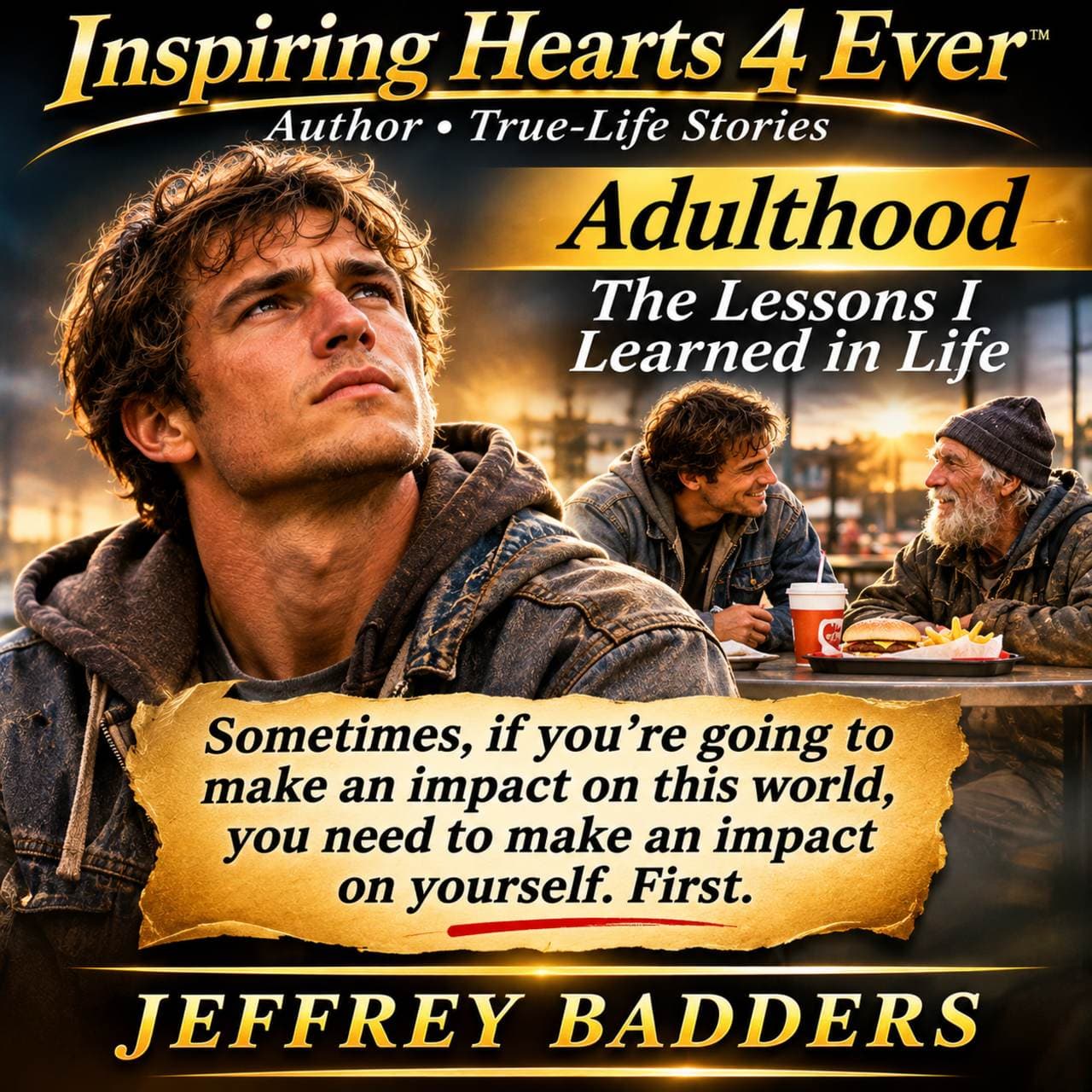
I remember being at a fast-food restaurant when an older gentleman approached me.
He had an old tin can and was looking for money.
I could have given him some money and continued with my day.
But I offered something different.
I asked him how he would feel about me buying him a meal.
We sat down together in that restaurant.
I don't remember exactly what he ordered.
But I remember that he started telling me about his life and why he was homeless.
And I listened.
I didn't sit there trying to tell him everything he had done wrong.
I didn't try to correct his life.
I didn't pretend that I had all the answers.
I just listened to him.
And while I was sitting there, I started thinking about my own childhood and adulthood.
I thought about everything I had survived, the mistakes I'd made, and the chances people had given me.
And I told myself that my life could have been worse.
Some people don't get the same chances.
Some people don't wake up the next morning.
Some people find themselves in situations where they wish they had thought before reacting.
And some people haven't found the light and love in God that helped me through my own darkness.
I couldn't know everything that gentleman had experienced.
But I could give him my attention.
I could listen without judging him.
I could treat him with dignity and respect.
And I could let him know that his story was worth hearing.
I've always believed there's something sad about how people sometimes try to correct everybody else when they haven't corrected themselves.
I knew I had made mistakes in my own life.
Who was I to sit across from that gentleman and act like I was better than him?
I wanted him to feel seen, heard, respected, and important.
And I hoped that maybe I could plant a positive seed in his heart, mind, and soul.
A seed of love.
A seed of hope.
Something that might continue growing within him.
And maybe, one day, he would have an opportunity to plant that same seed in somebody else who was struggling.
I didn't know what would happen in his life after we went our separate ways.
But I knew what I wanted to offer him in that moment.
Kindness.
Respect.
And the opportunity to be heard.
I've always learned something about people who are down in life.
When they're down, don't kick them. Stand beside them.
Two People, Two Thank-Yous
When we finished our meal, the gentleman thanked me.
He thanked me for buying him something to eat.
And I thanked him.
Not for the meal.
I thanked him for telling me his life story.
Because he had given me something, too.
He had trusted me enough to share part of his journey.
I walked away from that experience thinking about how much people carry inside themselves that the rest of the world never sees.
Sometimes we look at somebody and make a judgment before we even know their name.
We see their circumstances, their appearance, or their struggles.
But we don't know what happened in their life that brought them to that moment.
We don't know the bridges they've crossed.
We don't know the chances they've had or the chances they've lost.
And we don't know how much it might mean to them when somebody finally stops and listens.
I couldn't change that gentleman's entire life with one meal.
But I hoped I had made a small impact.
And sometimes, a small impact is enough to give somebody a little hope.
What I Wrote in My Journal
After that experience, I reflected on what had happened.
I wrote in my journal about change.
"Everybody can change, but how you change, it's not what people say, you need to do. It's what you need to do for yourself."
That lesson became important to me.
Because for a long time, I had wanted other people to validate who I was.
I wanted acceptance.
I wanted people to recognize me.
I wanted to feel important.
And I had to recognize something about my ego.
Sometimes people act like they're better than everybody else when, underneath that image, they're struggling with insecurity and looking for validation from society.
I had to confront that in myself.
I had to let go of my ego.
I had to let go of the constant need for validation.
I had to work on letting go of fear and anxiety.
I had to stop chasing money as though money was going to determine my worth.
I had to let go of trying to control everything.
And most importantly, I had to let go of the image of somebody I wasn't supposed to be.
I needed to become the man I was meant to be.
That didn't mean every problem in my life disappeared.
It meant I was beginning to understand that I had choices.
I could keep reacting to everything around me.
Or I could start thinking before I reacted.
I could keep trying to prove myself to everybody.
Or I could begin living with character and integrity.
I could spend my life trying to accumulate things.
Or I could spend my life trying to make a difference.
Those were choices I had to make for myself.
What Really Matters
As I look back on those experiences, I think about how much my understanding of life changed.
There was a time when I wanted people to give me chances.
I wanted someone to believe in me.
I wanted someone to recognize that my life mattered.
And there were people who did.
My aunt was one of them.
She believed in me when she didn't always believe in my ways.
And years later, I found myself sitting across from a homeless gentleman, wanting him to know that his life mattered, too.
That's something I've carried with me.
You don't have to solve everybody's problems to make a difference.
Sometimes you can offer a meal.
Sometimes you can offer a conversation.
Sometimes you can offer your time.
And sometimes, you can simply stand beside somebody who feels like the world has forgotten them.
I don't know what happened to that gentleman after we said goodbye.
I hope life gave him more opportunities.
I hope the kindness he received that day meant something to him.
And I hope he had a chance to pass that kindness along.
But I can only tell you what that experience meant to me.
It reminded me that everybody has a life story.
It reminded me that nobody is above anybody else.
And it reminded me that the person I needed to hold accountable first was myself.
I had spent part of my life burning bridges.
Now I wanted to build something different.
Not an image.
Not an ego.
Not a life measured only by money or possessions.
I wanted to build a life of character, integrity, compassion, and purpose.
A life where my actions reflected the values I believed in.
A life where the people I encountered might feel a little more seen, a little more heard, and a little less alone.
And that brought me back to the lesson I had been learning all along.
“Sometimes, if you're going to make an impact on this world, you need to make an impact on yourself. First”
---
Author's Note — A True-Life Testimony
Everything shared in this memoir is based on my real-life experiences, personal memories, and honest testimony.
I personally participated in interviews, answered questions, shared my memories, and described the emotions and lessons I experienced throughout my life.
AI was used as a writing and editorial assistant to help organize my interviews, develop the narrative, improve readability, and bring my personal testimony together into a complete story.
AI did not live these experiences or create the events of my life.
Written collaboratively by Jeffrey Badders with AI writing and editorial assistance.
Inspiring Hearts 4 Ever — True-Life Stories