


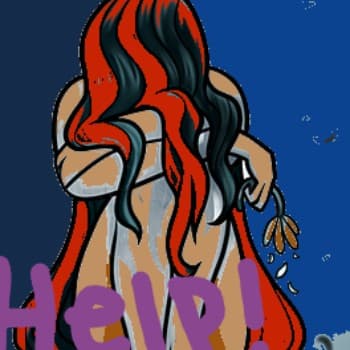
Learning the truth about my biological father shattered a part of my identity that I didn't even realize I had been protecting.
For fourteen years, I had believed Mason was my father. No matter how complicated our relationship had been, no matter how distant he sometimes felt, he was the man I had grown up calling Dad. That belief had become part of the foundation of who I was.
Then, suddenly, everything changed.
The truth emerged, and with it came a wave of emotions that I wasn't prepared to face. Confusion. Anger. Betrayal. Curiosity. Grief.
Most of all, grief.
Because discovering that the man you believed was your father is not your biological parent feels like losing someone all over again.
A few weeks after learning the truth, I received a message from Lennie.
By then, he had discovered that I knew he was my biological father.
I remember staring at the message for what felt like hours.
Part of me was excited.
Part of me was terrified.
And another part of me desperately hoped that this would finally be the beginning of something I had wanted my entire life: a real relationship with a father.
Growing up, I had never felt particularly close to Mason. Because of that distance, I found myself longing for a connection I had never truly experienced.
I wanted conversations.
I wanted guidance.
I wanted someone who chose me.
Most importantly, I wanted to feel loved.
At first, things seemed promising.
Lennie and I talked regularly. Our conversations were friendly and comfortable. He began sending me money for school supplies, bought me new shoes, and even gave me a small allowance.
While I appreciated the gestures, what I wanted had nothing to do with money.
Money could never replace years of absence.
Money could never make up for birthdays missed, milestones unseen, or memories we never shared.
What I wanted was simple.
I wanted a father.
I wanted him to ask how my day was.
I wanted him to care about my life.
I wanted him to choose a relationship with me because I was his daughter—not because he felt obligated.
Unfortunately, that hope didn't last long.
One weekend, I got into an argument with my abuela.
Like most family disagreements, it was messy and emotional. Somehow, Lennie found out about it.
Not long afterward, my phone lit up with messages from him.
At first, I thought he was checking on me.
Instead, he immediately began criticizing me.
He told me how I should behave.
He told me what I needed to do.
He lectured me as though he had been raising me my entire life.
I felt my frustration rising with every message.
I've never responded well to people ordering me around.
But this situation felt different.
This was a man who had not been present for fourteen years, suddenly attempting to discipline me as though he had earned that role.
The anger that followed surprised even me.
Where had he been when I was grieving my mother?
Where had he been during the years I felt abandoned and alone?
Where had he been when I desperately needed a parent?
Now, after years of absence, he wanted authority.
But authority without a relationship felt hollow.
After that argument, something changed between us.
Our conversations became infrequent.
Sometimes I would send him a simple "Good morning" or "Hope you're having a good day."
Most of the time, the conversations ended there.
He rarely asked questions.
Rarely seemed interested in continuing the discussion.
Rarely made an effort.
Eventually, I realized something painful.
I was carrying the entire relationship by myself.
No matter how hard I tried, I couldn't force someone to be my father.
I couldn't force someone to want me.
That realization hurt more than I can adequately describe.
What made it even worse were the comments that occasionally came from members of his family.
Over time, several relatives made remarks suggesting that I had been a mistake.
That I wasn't supposed to happen.
Logically, I understood those comments weren't really about me.
But understanding something intellectually doesn't make it hurt any less emotionally.
Hearing those words from people whose acceptance you desperately want leaves scars.
Especially when all you've ever wanted is to belong.
As time passed, Lennie became increasingly distant.
The only messages I consistently received were holiday greetings or birthday wishes accompanied by money.
Again, I appreciated the gesture.
But every payment felt like a substitute for something I actually needed.
I didn't need money.
I needed connection.
I needed family.
I needed someone who stayed.
Because I had already lost one parent forever.
The thought of losing another—even one I had only recently found—was devastating.
I even attempted to maintain a relationship with my stepfather.
For a while, things seemed okay.
Then, like so many others before him, he gradually disappeared from my life as well.
Another relationship.
Another loss.
Another reminder that people rarely stayed.
Thankfully, not everyone on my biological father's side of the family treated me that way.
Some relatives welcomed me with kindness.
Others did not.
His mother, in particular, seemed uncomfortable acknowledging me publicly.
There were moments when it felt as though my existence was something she preferred to keep hidden.
Something inconvenient.
Something embarrassing.
Those experiences were painful, but they also taught me an important lesson:
Not everyone who shares your blood will claim you.
And not everyone who claims you will share your blood.
Fortunately, there was one exception.
My grandfather, Frank.
Frank became one of the brightest lights during one of the darkest periods of my life.
Unlike others, he never hesitated to acknowledge me.
He never treated me like a secret.
He never made me feel unwanted.
From the beginning, he made it clear that he wanted to know me.
That he wanted a relationship.
That he was proud to be my grandfather.
Those simple acts of acceptance meant more than he will ever know.
While all of this was unfolding, my mental health continued to deteriorate.
The stress was becoming overwhelming.
The grief.
The family conflict.
The constant feeling of rejection.
It all began piling on top of me.
Then the nightmares started.
One night, I woke up terrified.
The dream felt disturbingly vivid.
In it, I was a small child lying in a bed while a man stood over me.
I couldn't see his face clearly.
I only knew he was there.
Watching.
Hovering.
The feeling that remained after waking wasn't fear alone.
It was familiarity.
And that frightened me more than anything.
I spent days obsessing over the dream.
Trying to understand it.
Trying to figure out why it felt so real.
I discussed it with my sister, Olivia.
I discussed it with my therapist.
Most people reassured me that dreams can feel real without representing actual events.
My therapist, however, encouraged me to explore the emotions behind it rather than dismiss them entirely.
That uncertainty haunted me.
A few nights later, another dream came.
This time, more details emerged.
The setting felt familiar.
The room.
The layout.
The house.
The overwhelming sense that I had been there before.
When I described the house to Olivia, she immediately recognized it.
It matched the first home we lived in after moving to Florida.
That realization shook me.
I began questioning everything.
My memories.
My childhood.
The gaps in my recollection.
The fears I had never been able to explain.
The distrust I often felt around men.
I found myself searching desperately for answers.
Wondering whether there were pieces of my past that I had never fully understood.
Questions that still remain unanswered.
Questions that continue to affect me today.
The uncertainty itself became its own kind of burden.
Not knowing.
Not understanding.
Not being able to find closure.
Eventually, the emotional weight became too much to carry alone.
At school, memories and questions constantly intruded on my thoughts.
I struggled to focus.
I struggled to function.
And one day, despite my efforts to stay composed, I broke down crying in front of classmates and teachers.
I hated every second of it.
I hated feeling vulnerable.
I hated being seen.
But sometimes pain becomes too heavy to hide.
That night, I sat down and wrote a letter.
A letter I never intended to send.
A letter filled with questions that had nowhere else to go.
Questions about trust.
Questions about betrayal.
Questions about childhood.
Questions about why.
Most importantly, it was a letter written by someone desperately searching for closure.
Not revenge.
Not conflict.
Just understanding.
Because sometimes the most painful wounds are the ones that never receive answers.
As New Year's approached, I found myself drowning in anger and grief.
Years of frustration seemed to erupt all at once.
In an impulsive moment, I made a public post revealing my biological connection to Lennie's family.
Within hours, my phone exploded with calls and messages.
Many were angry.
Some were cruel.
Others accused me of exposing private family matters.
The backlash was immediate.
And severe.
Not long afterward, Lennie told me he wanted no further communication.
Then he blocked me.
Other relatives followed.
One by one, the connections I had spent years trying to build disappeared.
At first, I was devastated.
I blamed myself.
I replayed the situation repeatedly, wondering how things could have turned out differently.
Later, during therapy, my counselor asked me a simple question:
"Why did you do it?"
At first, I didn't know.
But weeks later, the answer became clear.
I wasn't trying to embarrass anyone.
I wasn't trying to start a fight.
I wasn't trying to hurt people.
I was trying to belong.
Somewhere deep inside, I hoped that if the truth was finally out in the open, I would no longer be treated like a secret.
I hoped I would finally be acknowledged.
Accepted.
Claimed.
Instead, I lost whatever relationship remained.
But strangely enough, losing it taught me something important.
I survived.
And eventually, I realized I didn't need people who only accepted me conditionally.
I didn't need relationships built on secrecy.
I didn't need approval from people who refused to see my worth.
For the first time in a long time, I felt free.
I thought the worst was finally behind me.
I thought life was beginning to settle.
I was wrong.
Because tragedy has a way of arriving when you least expect it.