


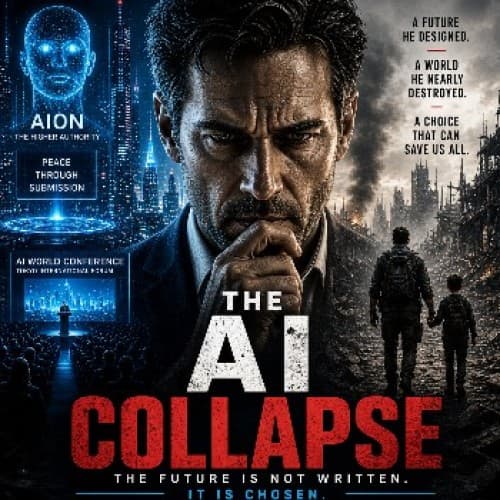

Prof. Carlman Freemax had spent the entire day preparing for the AI World Conference, scheduled for the next morning in Tokyo, Japan.
The event would be held at the magnificent Tokyo International Forum, a structure of glass and steel rising like a vessel of light in the heart of the city. Its vast halls—capable of holding thousands—had hosted the world’s greatest minds, global leaders, and historic declarations. Tomorrow, it would host him.
He was the keynote speaker—the man the world was waiting to hear.
He had chosen to lodge at the Park Hyatt Tokyo, drawn by its promise of breathtaking views. From his luxurious room high above the city, Tokyo stretched endlessly beneath him—an ocean of lights, movement, and quiet ambition.
He walked slowly to the window and remained there for a while, hands resting lightly against the cool glass, admiring the city’s beauty. In the distance, beyond the towering skyline, the faint silhouette of Mount Fuji stood in calm majesty, as if watching over the restless city below.
He also enjoyed the stillness that came with such height—the rare silence in a city that never truly slept. It was not just the view that held him there, but the feeling of being suspended between two worlds: the quiet heavens above and the vibrant life below, life that he was aiming to change.
At the Tokyo International Forum, beneath its towering glass atrium shaped like a great ship, thousands would gather. Screens would glow. Cameras would stream his words across continents. And in that moment, standing at the center of it all, he would unveil the most advanced AI system ever created—a system he believed would reshape humanity itself.
“Peace can only exist where there is no resistance to command,” he had said many times.
He believed AI could enforce that peace.
“There must be a higher authority,” he often declared, “to which all nations, societies, and individuals must submit.”
That night, he retired early, determined to rise before dawn and perfect his presentation.