


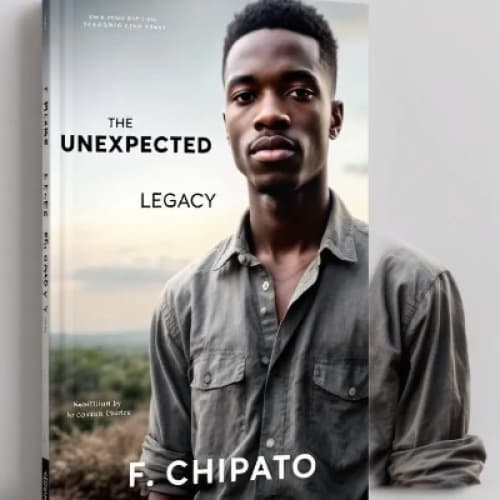

Ethan walked, not towards his cramped, rented room, not towards the dingy diner where he flipped burgers. He just walked, aimlessly, the crisp autumn air a stark contrast to the stifling, antique-scented opulence he'd just left. He passed gleaming shop windows, their reflections showing a boy who looked the same, but was irrevocably different, a ghost of his former self now shadowed by a colossal, unbelievable fortune. The weight of the world, or at least a significant portion of its wealth, felt strangely light and yet impossibly heavy in his chest.
The "why him?" question was a persistent hum, a buzzing fly in the quiet cathedral of his mind. He replayed the scene in Mr. Harrison's office: the unctuous pronouncements, the rustle of legal documents, the sheer, unbelievable numbers. But it always came back to the bench, to Archibald Finch.
He remembered the old man with startling clarity. It had been a Tuesday, a rare sunny afternoon when Ethan had taken his lunch break in the small park near the diner, a tattered paperback in his hand. Archibald Finch, or so he now knew him, had been slumped on the adjacent bench, looking fragile and utterly alone. His suit, though undoubtedly expensive, was rumpled, his white hair a wild halo, eyes distant.
Ethan hadn't thought anything of it until the old man had coughed, a dry, rattling sound that seemed to shake his frail frame. Ethan, without thinking, had offered him the half-eaten apple from his brown paper bag. "Are you alright, sir? Here, have an apple."
Finch had slowly turned his head, his eyes, surprisingly sharp and blue, had fixed on Ethan. He hadn't taken the apple. Instead, he'd asked, "Why?"
"Why what, sir?" Ethan had replied, a little taken aback.
"Why offer an apple to an old man you don't know? Most people would just walk by."
Ethan had shrugged, a genuine, unpretentious gesture. "Well, you looked like you needed something. And it's a good apple."
The old man had chuckled, a surprisingly warm sound. "Indeed. A good apple. And a good heart, I think. You know, young man, it's rare to find someone who doesn't treat kindness like a commodity."
They had talked for nearly an hour after that. Not about money, or legacies, or anything grand. They'd talked about the changing colours of the leaves, the surprisingly intelligent squirrels, the loneliness of big cities, and the simple pleasure of a quiet afternoon. Ethan had found himself sharing stories about his mother, about his hopes for art school he knew he'd never afford, about his simple dreams. The old man had listened, truly listened, without judgment, offering only a rare, soft smile or a thoughtful nod. He hadn't offered advice, just shared observations. Ethan had left feeling lighter, having had a genuinely human connection in a world that often felt transactional. He'd even forgotten to ask the old man's name.
That was it. An apple. A conversation about squirrels and leaves. A moment of unsolicited kindness and an ear to listen. Could that possibly be the reason? It seemed too fragile, too fleeting, to be the foundation of such an immense inheritance. Yet, the old man's words echoed: "It's rare to find someone who doesn't treat kindness like a commodity."
The implication hung heavy in the crisp autumn air. Had Archibald Finch, a man of immense wealth, been searching not for business acumen or a distant relative, but simply for an honest soul? Ethan frowned, the enormity of it settling in. He wasn't just a recipient of a fortune; he was a caretaker of an ideal, a quiet rebellion against a world that often valued everything but kindness. And suddenly, the mystery didn't feel like a puzzle to be solved, but a responsibility to be understood.